
(1900-1969)

POLIAKOFF Serge
Abstract composition, 1956
Gouache (modern) LCD6657

POLIAKOFF Serge
Orange composition, 1960
Gouache (modern) LCD5559

POLIAKOFF Serge
Abstract Composition, 1959
Gouache (modern) LCD5496

POLIAKOFF Serge
Composition lie-de-vin et bleue L63, 1966
Lithograph LCD8651
9 500.00€

POLIAKOFF Serge
Carmine, brown, yellow and grey composition, 1956
Lithograph LCD8576
8 500.00€

POLIAKOFF Serge
Blue, black and yellow composition, 1957
Lithograph LCD8515
7 500.00€

POLIAKOFF Serge
Composition in Orange, 1966
Mixed media (modern) LCD8278

POLIAKOFF Serge
Composition in blue, green and red, 1968
Aquatint LCD8348
9 800.00€

POLIAKOFF Serge
Composition in Blue, 1969
Lithograph LCD8466
15 000.00€

POLIAKOFF Serge
Red, green and blue composition, 1961
Lithograph LCD8508
5 000.00€

POLIAKOFF Serge
Composition in blue, 1964
Mixed media (modern) LCD8159
10 000.00€

POLIAKOFF Serge
Composition in purple, blue and red, 1964
Mixed media (modern) LCD8158
10 000.00€

POLIAKOFF Serge
Composition in blue, red and black L75, 1969
Lithograph LCD8040
17 000.00€

POLIAKOFF Serge
Composition in Blue, Black, Red and Green, 1964
Aquatint LCD6762
7 000.00€

POLIAKOFF Serge
Blue, Red, Yellow and Green Composition L40, 1963
Lithograph LCD7511
6 500.00€

POLIAKOFF Serge
Composition in blue, red , green and black III, 1958
Etching and aquatint LCD7628
9 500.00€

POLIAKOFF Serge
Blue, green and red composition L78, “L'ét..., 1969
Lithograph LCD7382
5 500.00€

POLIAKOFF Serge
Composition in blue, red and black, 1972
Lithograph LCD7727
15 000.00€

POLIAKOFF Serge
Green, blue, pink and yellow composition, 1964
Etching and aquatint LCD4892
6 500.00€

POLIAKOFF Serge
Red, blue and black composition, 1969
Lithograph LCD7233
15 000.00€

POLIAKOFF Serge
Composition in blue and red XXXI, 1967
Etching and aquatint LCD6676
11 000.00€

POLIAKOFF Serge
Composition bleue, rose et grise L30, 1960
Lithograph LCD6944
4 500.00€

POLIAKOFF Serge
Composition in red and blue L68, 1968
Lithograph LCD2498
5 000.00€

POLIAKOFF Serge
Catalogue Raisonné
Catalogue CRSPE
148.00€

POLIAKOFF Serge
Catalogue Raisonné 1900-1954 : Volume I
Catalogue CRSP1
250.00€

POLIAKOFF Serge
Catalog Raisonné 1966-1969 : Volume V
Catalogue CRSP5
248.00€

POLIAKOFF Serge
Catalog Raisonné 1963-1965 : Volume IV
Catalogue CRSP4
198.00€

POLIAKOFF Serge
Catalog Raisonné 1959-1962 : Volume III
Catalogue CRSP3
198.00€

POLIAKOFF Serge
Catalog Raisonné 1955-1958 : Volume II
Catalogue CRSP2
198.00€

POLIAKOFF Serge
Green, orange and wine-red composition L58, 1963
Lithograph LCD6925
8 500.00€

POLIAKOFF Serge
Composition brune et orange VII, 1961
Etching and aquatint LCD6699
11 000.00€

POLIAKOFF Serge
Composition in blue and green, 1963
Lithograph LCD4700
3 500.00€

POLIAKOFF Serge
Red, green and blue composition, 1969
Lithograph LCD6829
17 000.00€

POLIAKOFF Serge
Composition in red, yellow and blue, 1957
Lithograph LCD6550
8 500.00€

POLIAKOFF Serge
Composition in green and yellow, 1966
Lithograph LCD6552
8 000.00€

POLIAKOFF Serge
Composition pink, red and blue, 1958
Lithograph LCD6202
5 500.00€

POLIAKOFF Serge
Parmenides, 1964
Illustrated Book LCD5551
10 000.00€

POLIAKOFF Serge
Diane, 1968
Porcelain LCD6282
5 500.00€

POLIAKOFF Serge
Composition Purple, Grey and Green L65, 1967
Silkscreen LCD6239
7 500.00€

POLIAKOFF Serge
Composition bleue L21, 1959
Lithograph LCD5931
7 000.00€

POLIAKOFF Serge
Composition in orange and green, 1964
Lithograph LCD4804
7 500.00€

POLIAKOFF Serge
Composition in blue, yellow and grey, 1958
Lithograph LCD5575
7 500.00€

POLIAKOFF Serge
Composition in black and white, 1962
Lithograph LCD6114
4 000.00€

POLIAKOFF Serge
Composition in blue, green and red L31, 1961
Lithograph LCD5752
8 000.00€

POLIAKOFF Serge
Composition in blue and green L70, 1969
Lithograph LCD5862
10 000.00€

POLIAKOFF Serge
Blue, green and brown composition, 1968
Engraving LCD5800
6 500.00€

POLIAKOFF Serge
Composition bleue, grise et rouge XXVI, 1964
Etching and aquatint LCD5524
6 000.00€

POLIAKOFF Serge
Composition in blue and red, 1966
Lithograph LCD5403
8 500.00€

POLIAKOFF Serge
Composition in Black, Blue and Red n°37, 1962
Lithograph LCD4978
5 500.00€

POLIAKOFF Serge
Composition in Red, Carmine and Yellow, 1958
Lithograph LCD1675
7 500.00€

POLIAKOFF Serge
Composition in orange, red and black, 1957
Etching LCD4553
4 500.00€

POLIAKOFF Serge
Composition in blue, green and grey, 1955
Silkscreen LCD3482
8 500.00€

POLIAKOFF Serge
Composition in black, yellow and red, 1962
Etching and aquatint LCD3928
9 800.00€

POLIAKOFF Serge
Composition grise, rouge et jaune L27, 1960
Lithograph LCD4013

POLIAKOFF Serge
Composition in Green, Blue and Red n°48, 1965
Lithograph LCD2319
7 500.00€

POLIAKOFF Serge
Composition in Yellow Orange and Green n°14, 1957
Lithograph LCD1276
6 000.00€

POLIAKOFF Serge
Composition in Blue, Yellow and Red n°18, 1958
Lithograph LCD2002
6 500.00€

POLIAKOFF Serge
Composition in Red and Blue N°XXXVI, 1969
Etching and aquatint LCD1280
7 000.00€

POLIAKOFF Serge
Affiche
Poster AF16
650.00€

POLIAKOFF Serge
SERGE POLIAKOFF RETROSPECTIVE Mons, 2008
Poster AF10
100.00€

Serge POLIAKOFF
Composition bleue, rouge et jaune L20, 1958
Sold

Serge POLIAKOFF
Composition orange et rouge XXIX, 1966
Sold

Serge POLIAKOFF
Composition in blue, 1958
Sold

Serge POLIAKOFF
Red, gray, and black composition, 1960
Sold
Looking for a similar artwork?
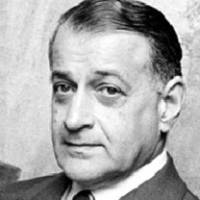
Serge Poliakoff (Moscow, January 8, 1900 – Paris, October 12, 1969) was a Russian-born French painter and one of the defining voices of postwar abstract art in Paris. A former cabaret guitarist who reached abstraction in his mid-forties, he developed an instantly recognizable style: tightly fitted, flat color shapes that seem to press against one another, painted in thin superimposed layers. His fine art prints – about eighty original color lithographs, some three dozen etchings and aquatints, and a few screenprints – translate that language directly onto paper and are actively collected in the United States and abroad.
At Le Coin des Arts, you’ll find Poliakoff works selected for print quality, color, condition and provenance. Current highlights include gouaches (Composition abstraite, 1956 and 1959; Composition orangée, 1960); lithographs such as Composition bleue (L71, 1969), Composition rouge, verte et bleue (L32, 1961), Composition bleue (L21, 1959), Composition noire et blanche (L38, 1962) and Composition jaune, orange et verte (L14, 1957); etchings and aquatints including Composition bleue et rouge XXXI (1967), Composition verte, bleue, rose et jaune XXV (1964) and Composition bleue II (1958); screenprints (L8, 1955; L65, 1967); the book Parménide (1964); the Diane porcelain (1968); posters; and the complete five-volume catalog raisonné of his paintings.
Poliakoff was the thirteenth of fourteen children. As a boy he painted landscapes near Nalchik in the Caucasus and showed a gift for music and mathematics. In 1918 the Russian Revolution sent him into exile alongside his aunt Nastia Poliakoff, a well-known singer he accompanied on guitar. Crossing the Caucasus, they reached Constantinople in 1919, then performed in Sofia, Belgrade, Vienna and Berlin (where he stayed two years). He arrived in Paris in 1923. For more than thirty years, the guitar paid his bills.
He took classes at the Académie de la Grande Chaumière (1929) and the Académie Frochot (1933), then spent 1935-1937 in London, studying at the Slade School. Egyptian sarcophagi at the British Museum showed him how layered color could create light. In London he married Marcelle Perreur-Lloyd, a Frenchwoman of Irish descent; their son Alexis was born in 1942. Back in Paris, friendships with Wassily Kandinsky, Sonia Delaunay and Robert Delaunay, and the sculptor Otto Freundlich pushed him toward pure abstraction. His first show of abstract work opened at the Galerie L’Esquisse in 1945; two years later he won the Kandinsky Prize (1947).
American recognition came early. In March 1953 the Circle & Square Gallery gave him a solo show in New York, followed by an exhibition at Knoedler Galleries, New York, on October 10-29, 1955. In Washington, D.C., The Phillips Collection presented Paintings by Serge Poliakoff from February 15 to March 10, 1959, and acquired his Composition (1957), tempera on plywood, that same year. The Museum of Modern Art in New York owns a 1946 lithograph from the album Art abstrait and an Abstract Composition of 1956; the North Carolina Museum of Art holds a gouache (Abstract, c. 1955) bequeathed by W. R. Valentiner. His work is also in the collections of the Solomon R. Guggenheim Museum and the Art Institute of Chicago.
In 1951 Poliakoff began working with dealer Dina Vierny, and around 1952 a contract with the Galerie Bing finally let him quit the guitar. A first major Belgian show followed in 1953 (Liège, Brussels, Verviers). He took part in documenta II (1959) and documenta III (1964) in Kassel, Germany. In 1962 he became a French citizen and was given his own room at the Venice Biennale. He won the international prize at the Tokyo Biennale (1965) and the Grand Prix of the Menton Biennale (1966), with retrospectives in St. Gallen, Switzerland (1966) and Caen (1968). He died in Paris on October 12, 1969, while preparing a major exhibition that opened there in 1970. The Musée d’Art Moderne de Paris revisited his career in “The Dream of Forms” (2013-2014).
Poliakoff made his first print in 1946 for Art abstrait (Éditions Opéra, printed by Desjobert). Lithography was a natural fit: every color requires a separate stone or plate, so the image is built up in layers, just like his paintings. Many lithographs were printed by the Pons studio in Paris for publishers including Nesto Jacometti (L’Œuvre gravée, Zurich) and Galerie Cavalero (Cannes); others were published by Erker-Presse in St. Gallen and by the art review XXe Siècle. His etchings and aquatints are scarcer; the plates for Parménide (La Rose des Vents, 1964) were printed by master printmaker Jean Signovert.
Collectors rely on two catalogs raisonnés: Yves Rivière, Serge Poliakoff. Les estampes (Arts et Métiers graphiques, Paris, 1974), and Alexis Poliakoff and Gérard Schneider, Serge Poliakoff: catalogue raisonné of the prints (Galerie française, Munich, 1998, trilingual). Lithographs and screenprints carry arabic numbers (“Rivière 14”); intaglio prints carry roman numerals (“Poliakoff-Schneider XXV”). Our “L” and roman-numeral references follow the same system.
Check the edition. Most editions run from 50 to 150 impressions (50 for Cavalero, 75 for Erker-Presse, 125 or 150 for Jacometti), plus a few artist’s proofs marked “EA.” The number on the sheet should match the catalog (see the printing process).
Look for a pencil signature. Original impressions are hand-signed in pencil, usually lower right. A signature printed in the stone doesn’t count (see the signature).
Inspect paper and color. Expect Arches, BFK Rives or Japan paper. Full margins and unfaded color matter enormously with Poliakoff.
Ask for the catalog number. A Rivière or Poliakoff-Schneider reference confirms date, edition size and publisher.
Avoid common traps. Posthumous lithographs signed in the plate, “after” prints, exhibition posters and unsigned plates from magazines or albums are not hand-signed originals. Plates from Parménide should be bought as part of the signed book.
Authentication. Paintings, gouaches and drawings are reviewed by the Committee and the Serge Poliakoff Archives; prints are authenticated by Le Coin des Arts. More on authenticity and framing.
Every Poliakoff print we offer is chosen for strong printing and well-preserved color. Explore related artists: Pierre Soulages, Hans Hartung, Nicolas de Staël, André Lanskoy, Gérard Schneider and Alexis Poliakoff, the School of Paris and lyrical abstraction, and our etchings and lithographs.
Yves Rivière, Serge Poliakoff. Les estampes, Arts et Métiers graphiques, Paris, 1974 · Alexis Poliakoff and Gérard Schneider, Serge Poliakoff: catalogue raisonné of the prints, Galerie française, Munich, 1998 · Alexis Poliakoff, Serge Poliakoff. Catalogue raisonné, 5 vols., 2005- · The Phillips Collection – Composition, 1957 · MoMA – Art abstrait, 1946 · North Carolina Museum of Art – Abstract · Galerie Dina Vierny – Serge Poliakoff · Musée d’Art Moderne de Paris – The Dream of Forms

Secure payment
3DSecure 2.2

Free DHL Express delivery from €1,200
Carefully prepared parcel
Parcel tracking

Shipment insured
for the full value of the artwork, covering theft and damage

Fairest prices
Certificate of authenticity
Two galleries in Paris
Receive an email as soon as a new artwork is added for this artist
Your message has been sent ! We will get back to you as soon as possible.
Please fill in the form if you need further information such
Please fill in your email address, an email will be sent with a link to update your password.
You can now place orders and track your orders.
To save your wishlist, you can log in or create an account :
This is a 100% custom-made frame, carefully crafted by a professional framer. Finishes are available in light oak, white wood or black wood, with or without mat board and plexiglass. Delivery times may vary depending on the order, with an average lead time of 10 days.
This option will be offered during the cart step.



