
(1909-2005)

MUSIC Zoran
Becco di Mezzodi, 1975
Etching and aquatint LCD8491
900.00€


MUSIC Zoran
Jardins déserts peut-être, 1976
Engraving LCD5592
450.00€

MUSIC Zoran
Jardins déserts peut-être, 1976
Engraving LCD5596
450.00€

MUSIC Zoran
Jardins déserts peut-être, 1976
Engraving LCD5593
450.00€

MUSIC Zoran
Deserted gardens perhaps. Music, Zoran - Lescure, Jean, 1976
Illustrated Book LCD5085
3 700.00€
2


MUSIC Zoran
Jardins déserts peut-être, 1976
Engraving LCD5594
Sold


MUSIC Zoran
Jardins déserts peut-être, 1976
Engraving LCD5595
Sold
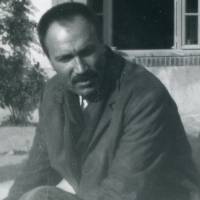
Portrait de Zoran Music par Michel-Georges Bernard — CC BY-SA 3.0
Few twentieth-century artists turned personal tragedy into art as powerfully as Zoran Music (in Slovenian, Zoran Mušič, 1909-2005). A survivor of the Dachau concentration camp, liberated by the U.S. Army in April 1945, this Slovenian-born painter and printmaker lived between Venice and Paris and became one of the most respected figures linked to the postwar School of Paris. His series We Are Not the Last is today represented in major museums on both sides of the Atlantic, and his etchings earned him the top printmaking award at the 1956 Venice Biennale.
Galerie Le Coin des Arts in Paris offers original etchings and drypoints by Zoran Music, hand-signed in pencil, as well as the limited edition artist’s book Jardins déserts peut-être and a vintage poster. Every artwork is selected for print quality, provenance and condition, and the gallery ships worldwide by insured DHL Express, free of charge from €1,200.
Anton Zoran Mušič was born on February 12, 1909, in the village of Bukovica near Gorizia, then in Austria-Hungary and now in Slovenia. His parents were both teachers. World War I and the border changes that followed uprooted the family several times, taking them to Styria, to Carinthia in Austria and back to Slovenian Styria; he graduated from high school in Maribor in 1928. The Viennese painting of Gustav Klimt and Egon Schiele made a lasting impression on the young artist.
In 1930, he enrolled at the Zagreb Academy of Fine Arts, where his teacher was the painter Ljubo Babić.
A decisive trip to Spain in 1935 brought him to the Prado in Madrid, where he copied Goya, Velázquez and El Greco, and on to Toledo. Goya in particular became a lifelong model. After military service in Yugoslavia, Music spent his summers painting in Dalmatia: barren hills, horses and donkeys, women dressed in black – images that would recur for the rest of his career. In 1942, he painted church frescoes in the Gorizia region.
After discovering Venice in October 1943 and exhibiting there in 1944, Music was arrested by the Gestapo that fall, accused of anti-German activities, held in Trieste and deported to Dachau in November 1944. Risking his life, he secretly drew what he saw – fellow prisoners, the dying, piles of corpses – producing nearly 200 drawings, only part of which survived. American troops liberated the camp on April 29, 1945.
Back in Venice in the fall of 1945, Music married painter Ida Cadorin Barbarigo in 1949. He made his first etchings and drypoints in 1947 and his first lithographs in 1948. Sharing the Prix de Paris with Antonio Corpora in 1951 opened the doors of the Galerie de France, which gave him his first Paris show in 1952. From then on he lived mainly in Paris, keeping a studio in Venice.
He exhibited at documenta in Kassel in 1955 and 1959 and, in 1956, won the Grand Prize for printmaking at the Venice Biennale. Throughout the 1950s and 1960s, his landscapes evolved toward a lyrical abstraction of earth tones, hills and rocks.
In 1970, Music finally confronted his memories of the camp in the series Nous ne sommes pas les derniers (We Are Not the Last, 1970-1976), made up of paintings, drawings and prints. The title is a warning that such atrocities could happen again, anywhere. Works from the series are held by the Metropolitan Museum of Art and the Hirshhorn Museum in Washington, D.C., among others, and Music is also represented at MoMA, the Art Institute of Chicago, the Philadelphia Museum of Art and the Cleveland Museum of Art.
His late work includes cycles of rocky landscapes, Cathedral Interiors (from 1982), The Studio (1983) and haunting self-portraits. In 1995, a major retrospective was held at the Grand Palais in Paris. Nearly blind in his final years, Music died in Venice on May 25, 2005, at the age of 96.
Music was first and foremost an intaglio printmaker. Etching, drypoint and aquatint allowed him to render his fragile, searching line and his deep, smoky grays; he also made lithographs. His copper plates were printed in Paris at the legendary Atelier Lacourière (later Lacourière et Frélaut), the shop that also printed for Picasso and Miró.
Key publishers include the Galerie de France in Paris – for instance Ombre sur le Carse (1958), edition size 300 – and Galerie Schmücking in Braunschweig, Germany. The plates of We Are Not the Last, etched from 1970 and published by Lacourière-Frélaut, are among his most sought-after fine art prints.
His illustrated books include Jardins déserts peut-être (1976), a poem by Jean Lescure with ten original drypoints, published by Schmücking in a limited edition of 115 copies on Rives paper. Prints from 1947 to 1962 are documented in the catalogue raisonné by Rolf Schmücking, Music. Das graphische Werk 1947 bis 1962 (1962), referenced as “Schmücking #”.
Whether you are starting a collection or adding a museum-caliber name to it, here is what to look for in a Zoran Music artwork on paper:
Technique – etching, drypoint, aquatint or lithograph. Edition size and numbering, including artist’s proofs. Hand-signed in pencil by the artist. Catalogue raisonné reference (Schmücking) for early prints. Publisher and printer – Galerie de France, Schmücking, Lacourière et Frélaut. Paper – Rives or BFK Rives. Provenance and condition – look for foxing, toning or trimmed margins. For drypoints, favor rich, velvety impressions: the burr wears down as the edition is printed.
Original print or reproduction?An original print is made directly on the plate by the artist and printed under his control. Exhibition posters and offset reproductions of his paintings are not original prints; they are unnumbered and should be priced and described accordingly.
Galerie Le Coin des Arts guarantees the authenticity of every Zoran Music print it offers and can arrange museum-quality framing. Explore related artists: Zao Wou-Ki, Maria Helena Vieira da Silva, Serge Poliakoff, Alfred Manessier and Jean Bazaine.
Wikipedia, Zoran Mušič · Maggiore g.a.m., biography · Tate · Museo Thyssen-Bornemisza · Rolf Schmücking, Music. Das graphische Werk 1947 bis 1962, Braunschweig, 1962.

Secure payment
3DSecure 2.2

Free DHL Express delivery from €1,200
Carefully prepared parcel
Parcel tracking

Shipment insured
for the full value of the artwork, covering theft and damage

Fairest prices
Certificate of authenticity
Two galleries in Paris
Receive an email as soon as a new artwork is added for this artist
Your message has been sent ! We will get back to you as soon as possible.
Please fill in the form if you need further information such
Please fill in your email address, an email will be sent with a link to update your password.
You can now place orders and track your orders.
To save your wishlist, you can log in or create an account :
This is a 100% custom-made frame, carefully crafted by a professional framer. Finishes are available in light oak, white wood or black wood, with or without mat board and plexiglass. Delivery times may vary depending on the order, with an average lead time of 10 days.
This option will be offered during the cart step.