
(1924-2003)
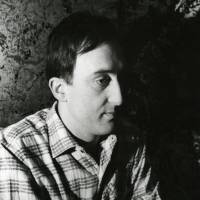
Portrait d'Enrico Baj par Paolo Monti, 1955 - CC BY-SA 4.0, Civico Archivio Fotografico of Milan
Enrico Baj (born October 31, 1924, in Milan; died June 16, 2003, in Vergiate, Italy) was the great satirist of postwar Italian art. He co-founded Nuclear Art in 1951, teamed up with Asger Jorn, showed with the Surrealists and turned ’pataphysics into a way of life. His trademark is the General: a puffed-up officer made of ribbons, braid, buttons and real medals glued to the canvas. Americans first saw his work in 1960, the Museum of Modern Art included him in a landmark 1961 show, and Chicago gave him a museum retrospective in 1971. Today his original fine art prints, more than 600 of them, are the easiest way to own a Baj.
Le Coin des Arts keeps a close eye on Baj’s work and offers his original etchings, lithographs and collaged screenprints when strong impressions become available, selected for print quality, edition, provenance and condition. Want to know when one comes in? Just click “follow the artist” on this page.
Baj grew up in a well-off Milan family and started painting at fourteen. In 1944 he slipped into Switzerland, to Geneva, to avoid the draft of Mussolini’s Salò Republic. Back home, he studied at the Brera Academy (1945-1948) and earned a law degree, then dropped law for art around 1950. In 1951 he had his first solo show at Milan’s Galleria San Fedele and launched the Nuclear Art Movement with Sergio Dangelo: splashed, exploding paintings that answered the fear of the bomb and rejected geometric abstraction. In 1953 he met Asger Jorn, the Danish painter of CoBrA, and the two founded the International Movement for an Imaginist Bauhaus. A year later Baj organized an international ceramics gathering in Albisola, on the Italian Riviera.
The late 1950s brought the Mountains (1957-1959), with patterned fabric standing in for skies, and the Modifications (1959-1960), thrift-store landscapes and nudes that Baj took over with his own monsters, the Ultrabodies (Ultracorpi). Starting around 1959-1960 came the Generals and the Ladies, satirical portraits of military brass and high society built from felt, lace, trimmings and medals, plus a short run of Furniture paintings (1960-1961) made from actual furniture scraps. The University of Michigan Museum of Art owns a collaged Generale from 1961. In 1963 Baj founded a pataphysical institute in Milan, and in 1966 he illustrated Raymond Queneau’s Meccano with prints pulled from pieces of the metal construction toy.
Baj’s U.S. debut came in 1960, when André Breton and Marcel Duchamp put him in Surrealist Intrusion in the Enchanters’ Domain at the D’Arcy Galleries in New York. In 1961 curator William Seitz picked him for The Art of Assemblage at the Museum of Modern Art, and his collage paintings found an eager American audience. After a room of his own at the 1964 Venice Biennale, the big moment came in 1971: a retrospective at the Museum of Contemporary Art, Chicago (also shown that year at Palazzo Grassi in Venice and in Geneva), for which he painted The Double Grande Jatte, a twenty-foot mural riffing on Seurat. His American profile faded in the 1980s and 1990s. The revival came in fall 2015, when Luxembourg & Dayan in New York showed some fifty early paintings, organized with his widow Roberta Cerini Baj and his longtime dealer Giorgio Marconi: the first U.S. survey of Baj since Chicago.
Baj moved in 1967 to an Art Deco villa in Vergiate, where he lived the rest of his life. A committed anarchist sympathizer, he made The Funeral of the Anarchist Pinelli (1972), roughly 10 by 40 feet of cutout figures honoring railroad worker Giuseppe Pinelli, who died after falling from a Milan police station window in 1969. Its opening at Milan’s Palazzo Reale, set for May 17, 1972, was canceled the same day police commissioner Luigi Calabresi was shot dead. The piece now belongs to the City of Milan. Baj went on to design sets for Jarry’s Ubu Roi (1984), marionettes for an opera with a libretto by Anthony Burgess (1989), and, in 1999, 164 portraits inspired by Proust. Rome’s Palazzo delle Esposizioni gave him a retrospective in 2001-2002.
Baj made his first prints, etchings for Lucretius’ De Rerum Natura, in 1952-1954, and moved into color lithography from 1955. His go-to printer was Giorgio Upiglio of the Milan workshop Grafica Uno (founded 1962), who printed many of his intaglio prints, including a 1963 color etching published by Berggruen and Schwarz and the 15 etchings of Chapeaugaga (1970). Other key names: Sergio Tosi, who published the Queneau Meccano book (1966), and Studio Marconi, publisher of the 1969 multiple Baj at Marconi’s, a screenprinted shopping bag stuffed with ties, postcards and a mannequin arm, now at MoMA. Baj also sits alongside the American Pop artists in 1¢ Life (Bern, E. W. Kornfeld, 1964), the cult book of poems by Walasse Ting edited by Sam Francis: 62 lithographs by 28 artists, from Andy Warhol and Roy Lichtenstein to Jorn and Appel, printed in Paris by Maurice Beaudet. Plates from it are in the Ackland Art Museum at Chapel Hill, while the Chazen Museum of Art in Madison owns his embossed color print Personage (1964), and the Museum of Contemporary Art San Diego holds Decorated Prophet (1972). MoMA also owns his flocked screenprint Seated Woman from the 1973 Homage to Picasso portfolio. Baj’s signature move is the mixed-media screenprint, with collage, flocking, fabric, buttons or relief medals added by hand. The two catalogs raisonnés are Jean Petit’s Baj, catalogue de l’œuvre graphique et des multiples (2 vols., Geneva, 1970-1974) and Baj: Catalogo generale delle stampe originali (Electa, Milan, 1986), which records about 640 prints.
Get the reference. Ask for the Petit or Electa number. Electa lists the 1971 screenprint Anamorfosi di generale (edition of 75) as no. 323, for example.
Know the edition. Runs vary widely, from 10 impressions for some 1960s lithographs to 75-150 for later screenprints. Learn more about the printing process.
Check the signature. Look for a pencil signature, usually lower right. See the signature.
Inspect the add-ons. On collaged prints, make sure all fabric, flock and metal pieces are there and secure.
Ask about provenance. A publisher’s label or invoice (Studio Marconi, Grafica Uno, Kornfeld), an old gallery sticker or an exhibition history adds confidence, and value.
Skip the posters. Offset exhibition posters are reproductions, not original prints, even when they carry Baj’s name in large type.
Frame for relief. Use a deep spacer so the glazing never presses on the collage. See our framing page and authenticity guarantee.
Keep exploring: Karel Appel and Pierre Alechinsky of CoBrA, Roberto Matta, Valerio Adami, and the assemblage artists Arman and Jean Tinguely. Or browse all our fine art prints.
Jean Petit, Baj, catalogue de l’œuvre graphique et des multiples, 2 vols., Geneva, Éditions Rousseau, 1970-1974 · Baj: Catalogo generale delle stampe originali, Milan, Electa, 1986 · MoMA – Baj at Marconi’s, 1969 · MoMA – Seated Woman, Homage to Picasso · Luxembourg & Dayan – Enrico Baj, 2015 · Art in America – Enrico Baj review · UMMA – Generale, 1961 · Fondazione Marconi – Enrico Baj

Secure payment
3DSecure 2.2

Free DHL Express delivery from €1,200
Carefully prepared parcel
Parcel tracking

Shipment insured
for the full value of the artwork, covering theft and damage

Fairest prices
Certificate of authenticity
Two galleries in Paris
Receive an email as soon as a new artwork is added for this artist
Your message has been sent ! We will get back to you as soon as possible.
Please fill in the form if you need further information such
Please fill in your email address, an email will be sent with a link to update your password.
You can now place orders and track your orders.
To save your wishlist, you can log in or create an account :
This is a 100% custom-made frame, carefully crafted by a professional framer. Finishes are available in light oak, white wood or black wood, with or without mat board and plexiglass. Delivery times may vary depending on the order, with an average lead time of 10 days.
This option will be offered during the cart step.



