
(1893-1983)

MIRO Joan
The Most Beautiful Gift (Poems by blind children), 1973
Etching and aquatint LCD8079
6 000.00€


MIRO Joan
The Man with the Pendulum, 1969
Aquatint and carborundum LCD8513
6 800.00€

MIRO Joan
Album 19 - Plate I, 1961
Lithograph LCD8512
3 950.00€

MIRO Joan
The riddled angel, 1973
Aquatint LCD8100
8 000.00€

MIRO Joan
Strindberg Mappen, 1976
Lithograph LCD8102
6 500.00€

MIRO Joan
Women, Birds, Star, 1960
Lithograph LCD8124
9 000.00€


MIRO Joan
Lightning Eater I, 1973
Lithograph LCD7827
6 800.00€

MIRO Joan
Strong Wind, 1960
Etching and aquatint LCD7706
7 500.00€


MIRO Joan
Llibre dels sis sentits (Books of th six senses), 1981
Etching and aquatint LCD7473
9 000.00€
6


MIRO Joan
Poster for the opening of the Joan Miró Foundation in..., 1976
Lithograph LCD5735
5 500.00€
3


MIRO Joan
Je travaille comme un jardinier, 1963
Lithograph LCD5019
3 000.00€


MIRO Joan
Congreso Nacional de Cirugia, 1979
Poster AF36
150.00€


MIRO Joan
Tres Joans, 1978
Poster AF39
150.00€

MIRO Joan
Man 73, 1973
Poster AF42
150.00€

MIRO Joan
Galerie Maeght, 1978
Poster AF41
150.00€

MIRO Joan
Homenatge Sert-Artigas, 1972
Poster AF32
150.00€

MIRO Joan
Les Essències de La Terra, 1969
Poster AF25
150.00€

MIRO Joan
MIRO, Exposicion Homenje a Josep-Lluis Sert, 1972
Poster AF3
200.00€


MIRO Joan
Women on the Beach (Constellations), 1959
Stencil LCD8305
3 200.00€

MIRO Joan
Maravillas con variaciones acrosticas en el jardin de Miro, 1975
Lithograph LCD8304
450.00€
2

MIRO Joan
Maravillas con variaciones acrosticas en el jardin de Miro, 1975
Lithograph LCD8303
450.00€
3


MIRO Joan
Quelques fleurs pour des amis, 1964
Facsimile LCD7680
950.00€

MIRO Joan
Quelques fleurs pour des amis, 1964
Facsimile LCD7679
950.00€

MIRO Joan
Quelques fleurs pour des amis, 1964
Facsimile LCD7174
950.00€


MIRO Joan
Quelques fleurs pour des amis, 1964
Facsimile LCD6466
950.00€

MIRO Joan
Quelques fleurs pour des amis, 1964
Facsimile LCD6467
950.00€

MIRO Joan
Quelques fleurs pour des amis, 1964
Facsimile LCD6477
950.00€


MIRO Joan
Pink Ant, 1978
Etching and aquatint LCD8250
Sold


MIRO Joan
Rogellio Lacourière Pêcheur de cuivres, 1968
Etching and carborundum LCD8353
Sold

MIRO Joan
Danseuses acrobates (Constellations), 1959
Stencil LCD8204
Sold

MIRO Joan
Women by the lake, its surface iridescent with the passing o..., 1959
Stencil LCD8203
Sold

MIRO Joan
Quelques fleurs pour des amis, 1964
Facsimile LCD4591
Sold
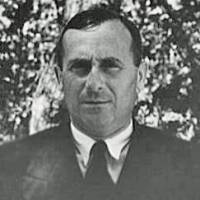
Portrait de Joan Miro par Carl Van Vechten, 1935 - Domaine Public, Library of Congress
Joan Miró (1893–1983) was one of the leading figures of modern art and Surrealism. A Catalan painter, sculptor, ceramicist, and printmaker, he developed over more than sixty years an instantly recognizable language of signs, stars, figures, birds, and colorful shapes that move between abstraction, poetry, and imagination.
Yet his work goes far beyond painting. Joan Miró gave a central place to the original print, creating an exceptionally rich body of lithographs, etchings, aquatints, carborundum prints, and illustrated books.
Le Coin des Arts gallery in Paris regularly offers original works by Joan Miró, especially lithographs and etchings, giving collectors a window into the richness of his graphic work and the evolution of his visual language.
Joan Miró i Ferrà was born on April 20, 1893, in Barcelona. Drawn to drawing from an early age, he trained in his hometown, notably at the La Llotja art school.
Beginning in the 1910s, the Catalan landscape of Mont-roig, where his family owned a farm, became an essential source for his work. The land, animals, plants, and everyday objects would shape his visual vocabulary for decades.
Miró spent time in Paris starting in 1920 and connected with avant-garde artists and writers. His closeness to the Surrealist movement played a decisive role in the evolution of his work, although he always remained fiercely independent of organized movements.
Gradually, elements of reality turned into signs, lines, stars, moons, birds, and figures. Miró built a highly personal visual language, somewhere between figuration and abstraction, that became one of the most recognizable of the 20th century. Mont-roig, Paris, and later Mallorca, where he settled in 1956, remained its key places.
His encounters with Surrealist poets and writers helped free Miró from traditional conventions of representation.
From the 1920s on, he gradually simplified his figures and transformed pictorial space. Just a few signs were now enough to suggest a woman, a bird, a star, or a figure.
Color plays an essential role as well. Blue, red, yellow, green, and black often appear as bold, flat areas against sparer backgrounds. Black structures the compositions, while color creates rhythm, tension, and balance.
Even when it looks spontaneous, or almost childlike, this visual writing is the result of highly deliberate work: behind the apparent simplicity of the signs lies a constant exploration of space, material, gesture, and the poetry of the image.
Joan Miró’s graphic work is an essential part of his output. He took up lithography and etching in the late 1920s and early 1930s, notably to illustrate books by poets.
An original Joan Miró lithograph is not a reproduction of a painting: it is conceived as an independent work, created from the possibilities unique to printmaking.
In 1938, his work in the studio of the painter and printmaker Louis Marcoussis, where he experimented with etching and drypoint on copper, marked a decisive step in his printmaking.
This research became so important in his work that Miró received the Grand Prize for printmaking at the 1954 Venice Biennale.
Lithography is one of the major techniques in Miró’s graphic work.
It allowed him to recapture the freedom of his drawing while working with color in a particularly rich way. His lithographs often pair broad, flat areas of red, blue, yellow, green, and black with finer lines and the signature forms of his world (birds, women, stars, constellations, figures, and signs) in compositions that range from very spare to highly dynamic.
Miró worked with leading printers and publishers, notably the Mourlot studio and Galerie Maeght, both of which played a major role in the development of his lithographic work.
He also illustrated many books by poets and writers, from Tristan Tzara to Paul Éluard and René Char, and their plates form an important part of his printed work.
Printmaking allowed Miró to explore new relationships between gesture, ink, relief, and paper. He used etching, aquatint, and drypoint, often combining several processes in a single work.
The copper plate, the acid, the inking, and the pressure of the press produce effects that are impossible to achieve directly in painting or drawing. Miró took full advantage of these qualities and turned printmaking into a true field of experimentation, where the quality, texture, and weight of the paper directly shape the final look of the work.
Starting in 1967, Joan Miró embraced a technique that was then new: carborundum printmaking, developed by the painter Henri Goetz.
The process involves applying a silicon carbide-based material to the plate, creating rough surfaces that hold a large amount of ink. Under the press, the paper is deeply embossed, giving the print exceptional relief and density.
Often combined with etching and aquatint, the technique allowed him to achieve very deep blacks, heavily textured surfaces, and prints whose physical presence sometimes comes close to painting. It is one of the most original aspects of his late graphic work.
Miró’s ties to the United States began early. From 1932 he was represented in New York by the dealer Pierre Matisse, the son of Henri Matisse, who championed his work for decades. In 1941, the Museum of Modern Art in New York held a major retrospective of his work.
In 1947, on his first trip to the United States, Miró painted a large mural for the Terrace Plaza Hotel in Cincinnati, now in the collection of the Cincinnati Art Museum. After World War II, he took on monumental projects and also turned to ceramics and sculpture.
With the ceramicist Josep Llorens Artigas, he created the two large ceramic walls for the UNESCO headquarters in Paris, unveiled in 1958: the Wall of the Sun and the Wall of the Moon, which earned him the Guggenheim International Award.
The Fondation Maeght, which opened in 1964 in Saint-Paul-de-Vence on the French Riviera, houses several major works by Miró, including his celebrated Labyrinth.
In 1968, Harvard University awarded him an honorary doctorate, an honor the University of Barcelona also bestowed in 1979.
The Fundació Joan Miró, established in 1972 at the artist’s initiative, opened to the public in 1975 in a building on Montjuïc hill designed by his friend Josep Lluís Sert, the architect who had served as dean of the Harvard Graduate School of Design. Miró wanted it to be devoted not only to his own work but also open to contemporary art and young artists. Today it holds an outstanding collection of his paintings, sculptures, drawings, textiles, and graphic works.
The artist kept working until an advanced age. He died in Palma de Mallorca on December 25, 1983, at the age of 90.
Because Joan Miró’s graphic work is so extensive, each print needs to be studied carefully: technique, paper, edition size, signature, numbering, publisher or printer, provenance, condition, and above all its reference number in the catalogue raisonné.
Three reference works are authoritative: Joan Miró lithographe (Fernand Mourlot, then Patrick Cramer) for the lithographs, Miró graveur (Jacques Dupin) for the etchings, and Patrick Cramer’s catalogue of the illustrated books. Each print is identified by a number, cited as “Mourlot no.,” “Dupin no.,” or “Cramer no.” Since some works exist in several states, editions, or printings, this reference is essential for any collector.
Original lithograph, Derrière le Miroir, or reproduction? Not every print with Miró’s name on it is the same. The lithographs published in Derrière le Miroir, the art review issued by Maeght in Paris, are original lithographs, but they are unsigned and unnumbered. Prints “after Miró” are interpretive prints made by another printmaker, and many posters and reproductions are on the market. The catalogue raisonné reference is what tells them apart.
Le Coin des Arts selects and offers original lithographs and prints by Joan Miró from Paris, paying particular attention to their authenticity, provenance, catalogue raisonné reference, and condition.
The gallery also advises collectors on choosing a work, as well as on its framing, display, and conservation.
Fundació Joan Miró, Barcelona · Museum of Modern Art, New York · Cincinnati Art Museum · Fondation Maeght, Saint-Paul-de-Vence · Centre Pompidou, Paris · Bibliothèque nationale de France · Fernand Mourlot and Patrick Cramer, Joan Miró lithographe · Jacques Dupin, Miró graveur · Patrick Cramer, Joan Miró. The Illustrated Books, Catalogue Raisonné.

Secure payment
3DSecure 2.2

Free DHL Express delivery from €1,200
Carefully prepared parcel
Parcel tracking

Shipment insured
for the full value of the artwork, covering theft and damage

Fairest prices
Certificate of authenticity
Two galleries in Paris
Receive an email as soon as a new artwork is added for this artist
Your message has been sent ! We will get back to you as soon as possible.
Please fill in the form if you need further information such
Please fill in your email address, an email will be sent with a link to update your password.
You can now place orders and track your orders.
To save your wishlist, you can log in or create an account :
This is a 100% custom-made frame, carefully crafted by a professional framer. Finishes are available in light oak, white wood or black wood, with or without mat board and plexiglass. Delivery times may vary depending on the order, with an average lead time of 10 days.
This option will be offered during the cart step.


