
(1893-1983)

MIRO Joan
The Most Beautiful of Gifts (Poems by blind children), 1973
Etching and aquatint LCD8079
6 000.00€


MIRO Joan
The Man with the Pendulum, 1969
Aquatint and carborundum LCD8513
6 800.00€

MIRO Joan
Album 19 - Plate I, 1961
Lithograph LCD8512
3 950.00€

MIRO Joan
The riddled angel, 1973
Aquatint LCD8100
8 000.00€

MIRO Joan
Strindberg Mappen, 1976
Lithograph LCD8102
6 500.00€

MIRO Joan
Women, Birds, Star, 1960
Lithograph LCD8124
9 000.00€


MIRO Joan
Lightning Eater I, 1973
Lithograph LCD7827
6 800.00€

MIRO Joan
Strong Wind, 1960
Etching and aquatint LCD7706
7 500.00€


MIRO Joan
Llibre dels sis sentits (Books of th six senses), 1981
Etching and aquatint LCD7473
9 000.00€
6


MIRO Joan
Poster for the opening of the Joan Miró Foundation in..., 1976
Lithograph LCD5735
5 500.00€
3


MIRO Joan
Je travaille comme un jardinier, 1963
Lithograph LCD5019
3 000.00€


MIRO Joan
Congreso Nacional de Cirugia, 1979
Poster AF36
150.00€


MIRO Joan
Tres Joans, 1978
Poster AF39
150.00€

MIRO Joan
Man 73, 1973
Poster AF42
150.00€

MIRO Joan
Galerie Maeght, 1978
Poster AF41
150.00€

MIRO Joan
Homenatge Sert-Artigas, 1972
Poster AF32
150.00€

MIRO Joan
Les Essències de La Terra, 1969
Poster AF25
150.00€

MIRO Joan
MIRO, Exposicion Homenje a Josep-Lluis Sert, 1972
Poster AF3
200.00€


MIRO Joan
Women on the Beach (Constellations), 1959
Stencil LCD8305
3 200.00€

MIRO Joan
Maravillas con variaciones acrosticas en el jardin de Miro, 1975
Lithograph LCD8304
450.00€
2

MIRO Joan
Maravillas con variaciones acrosticas en el jardin de Miro, 1975
Lithograph LCD8303
450.00€
3


MIRO Joan
Quelques fleurs pour des amis, 1964
Facsimile LCD7680
950.00€

MIRO Joan
Quelques fleurs pour des amis, 1964
Facsimile LCD7679
950.00€

MIRO Joan
Quelques fleurs pour des amis, 1964
Facsimile LCD7174
950.00€


MIRO Joan
Quelques fleurs pour des amis, 1964
Facsimile LCD6466
950.00€

MIRO Joan
Quelques fleurs pour des amis, 1964
Facsimile LCD6467
950.00€

MIRO Joan
Quelques fleurs pour des amis, 1964
Facsimile LCD6477
950.00€


MIRO Joan
Pink Ant, 1978
Etching and aquatint LCD8250
Sold


MIRO Joan
Rogellio Lacourière Pêcheur de cuivres, 1968
Etching and carborundum LCD8353
Sold

MIRO Joan
Danseuses acrobates (Constellations), 1959
Stencil LCD8204
Sold

MIRO Joan
Women by the lake, its surface iridescent with the passing o..., 1959
Stencil LCD8203
Sold

MIRO Joan
Quelques fleurs pour des amis, 1964
Facsimile LCD4591
Sold
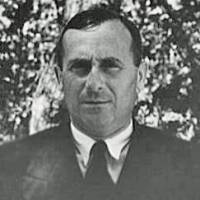
Portrait de Joan Miro par Carl Van Vechten, 1935 - Domaine Public, Library of Congress
Joan Miró (1893–1983) was one of the leading figures of modern art and Surrealism. A Catalan painter, sculptor, ceramicist and printmaker, he developed over more than sixty years an instantly recognisable language of signs, stars, figures, birds and coloured forms that hover between abstraction, poetry and imagination.
Yet his work goes far beyond painting. Joan Miró gave a central place to the original print, through an exceptionally rich body of lithographs, etchings, aquatints, carborundum prints and illustrated books.
Le Coin des Arts gallery in Paris regularly presents original works by Joan Miró, notably lithographs and etchings, offering collectors an insight into the richness of his graphic work and the development of his visual language.
Joan Miró i Ferrà was born on 20 April 1893 in Barcelona. Drawn to drawing from an early age, he trained in his native city, notably at the La Llotja school of art.
From the 1910s onwards, the Catalan landscape of Mont-roig, where his family owned a farm, became an essential source of his world. The earth, animals, plants and everyday objects would nourish his visual vocabulary for decades.
Miró spent time in Paris from 1920 and came into contact with avant-garde artists and writers. His closeness to the Surrealist movement played a decisive role in the development of his work, although he always remained fiercely independent of organised movements.
Little by little, elements of reality were transformed into signs, lines, stars, moons, birds and figures. Miró thus built a highly personal visual language, between figuration and abstraction, which became one of the most recognisable of the 20th century. Mont-roig, Paris and then Majorca, where he settled in 1956, remained its key places.
His encounter with the Surrealist poets and writers helped free Miró from the traditional conventions of representation.
From the 1920s he gradually simplified his figures and transformed pictorial space. A few signs were now enough to suggest a woman, a bird, a star or a figure.
Colour also plays an essential role. Blue, red, yellow, green and black often appear as bold flat areas on sparer backgrounds. Black structures the compositions, while colour creates rhythms, tensions and points of balance.
Even when it appears spontaneous, or almost childlike, this visual writing is the result of highly constructed work: behind the apparent simplicity of the signs lies a constant exploration of space, material, gesture and the poetry of the image.
Joan Miró’s graphic work is an essential part of his output. He took up lithography and etching in the late 1920s and early 1930s, notably to illustrate books by poets.
An original Joan Miró lithograph is not a reproduction of a painting: it is conceived as an autonomous work, created from the possibilities specific to printing.
In 1938, his work in the studio of the painter and printmaker Louis Marcoussis, where he experimented with etching and drypoint on copper, marked a decisive step in his printmaking.
This research became so important in his oeuvre that Miró was awarded the Grand Prize for printmaking at the 1954 Venice Biennale.
Lithography is one of the major techniques of Miró’s graphic work.
It allowed him to recover the freedom of his drawing while working with colour in a particularly rich way. His lithographs often combine broad flat areas of red, blue, yellow, green and black with finer lines and the characteristic forms of his world – birds, women, stars, constellations, figures and signs – in compositions that are sometimes very pared back, sometimes particularly dynamic.
Miró worked with great printers and publishers, notably the Mourlot studio and Galerie Maeght, both of which played a major role in the development of his lithographic work.
He also illustrated many books by poets and writers, from Tristan Tzara to Paul Éluard and René Char, whose plates form an important part of his printed oeuvre.
Printmaking allowed Miró to explore other relationships between gesture, ink, relief and paper. He used etching, aquatint and drypoint, often combining several processes in a single work.
The copper plate, the acid, the inking and the pressure of the press produce effects impossible to obtain directly in painting or drawing. Miró fully exploited these qualities and made printmaking a true field of experimentation, in which the quality, grain and weight of the paper contribute directly to the final appearance of the work.
From 1967, Joan Miró took up a technique that was then new: carborundum printmaking, developed by the painter Henri Goetz.
The process involves applying a silicon carbide-based material to the plate, creating rough surfaces that hold a great deal of ink. Under the press, the paper is deeply embossed, giving the print exceptional relief and density.
Often combined with etching and aquatint, the technique allowed him to achieve very deep blacks, heavily textured surfaces and prints whose physical presence sometimes approaches that of painting. It is one of the most original aspects of his late graphic work.
Joan Miró’s international recognition came early: the Museum of Modern Art in New York held a major retrospective of his work as early as 1941. After the Second World War, Miró took on monumental projects and also turned to ceramics and sculpture.
With the ceramicist Josep Llorens Artigas, he created the two large ceramic walls for the UNESCO headquarters in Paris, unveiled in 1958: the Wall of the Sun and the Wall of the Moon, which earned him the Guggenheim International Award.
The Fondation Maeght, opened in 1964 in Saint-Paul-de-Vence, houses several major works by Miró, including his celebrated Labyrinth.
In Britain, Tate Modern devoted a major retrospective to him in 2011, Joan Miró: The Ladder of Escape, which then travelled to the Fundació Joan Miró in Barcelona and the National Gallery of Art in Washington.
In 1968 Harvard University awarded him an honorary doctorate, an honour also conferred by the University of Barcelona in 1979.
The Fundació Joan Miró, established in 1972 on the artist’s initiative, opened to the public in 1975 in a building designed by his friend the architect Josep Lluís Sert on Montjuïc hill. Miró wanted it to be devoted not only to his own work but also open to contemporary creation and young artists. Today it holds an outstanding collection of his paintings, sculptures, drawings, textiles and graphic works.
The artist continued to work until an advanced age. He died in Palma de Majorca on 25 December 1983, aged 90.
The sheer abundance of Joan Miró’s graphic work makes careful study of each print particularly important: technique, paper, edition, signature, numbering, publisher or printer, provenance, condition and, above all, the reference in the catalogue raisonné.
Three reference works are authoritative: Joan Miró lithographe (Fernand Mourlot, then Patrick Cramer) for the lithographs, Miró graveur (Jacques Dupin) for the etchings, and Patrick Cramer’s catalogue of the illustrated books. Prints are identified by a number, cited as “Mourlot no.”, “Dupin no.” or “Cramer no.”. As some works exist in several states, editions or printings, this reference is essential for collectors.
Original lithograph, Derrière le Miroir or reproduction? Not every print bearing Miró’s name is equal. The lithographs published in Derrière le Miroir, the review issued by Maeght, are original lithographs, but unsigned and unnumbered. Prints “after Miró” are interpretative prints made by another printmaker, and many posters and reproductions circulate on the market. The catalogue raisonné reference is what makes the difference.
Le Coin des Arts selects and presents original lithographs and prints by Joan Miró in Paris, paying particular attention to their authenticity, provenance, catalogue raisonné reference and condition.
The gallery also advises collectors on choosing a work, as well as on its framing, display and conservation.
Fundació Joan Miró, Barcelona · Museum of Modern Art, New York · Tate Modern, London · Fondation Maeght, Saint-Paul-de-Vence · Centre Pompidou, Paris · Bibliothèque nationale de France · Fernand Mourlot and Patrick Cramer, Joan Miró lithographe · Jacques Dupin, Miró graveur · Patrick Cramer, Joan Miró. The Illustrated Books, Catalogue Raisonné.

Secure payment
3DSecure 2.2

Free DHL Express delivery from €1,200
Carefully prepared parcel
Parcel tracking

Shipment insured
for the value of the artwork, covering theft and damages

Fairest prices
Certificate of authenticity
Two galleries in Paris
Receive an email as soon as a new artwork is added for this artist
Your message has been sent ! We will get back to you as soon as possible.
Please fill in the form if you need further information such
Please fill in your email address, an email will be sent with a link to update your password.
You can now place orders and track your orders.
To save your wishlist, you can log in or create an account :
This is a 100% custom-made frame, carefully crafted by a professional framer. Finishes are available in light oak, white wood or black wood, with or without mat board and plexiglass. Delivery times may vary depending on the order, with an average lead time of 10 days.
This option will be offered during the cart step.


