
(1911-1977)

GILIOLI Emile
La Boisseloune, 1955
Sculpture LCD6512


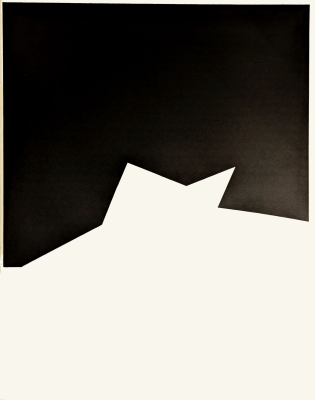
GILIOLI Emile
Composition Aile noire
Lithograph LCD6923
550.00€


GILIOLI Emile
Cubist interior, 1941
Pastel (modern) LCD5558
4 000.00€

GILIOLI Emile
Composition, 1962
Lithograph LCD3761
650.00€
Émile Gilioli (born in Paris on 10 June 1911, died in Paris in 1977) is widely recognised as one of the leading figures of post-war abstract sculpture in France. The son of Italian shoemakers, trained as a blacksmith before he ever entered an art school, he arrived at abstraction in wartime Grenoble and went on to show with Denise René, Louis Carré and Dina Vierny in Paris. His smooth, egg- and pebble-like forms in stone, marble and polished bronze belong to the collections of the Tate, the Centre Pompidou and the Museum of Modern Art in New York, and his best-known public work is the National Monument to the Resistance on the Plateau des Glières (1973). Alongside the sculpture he produced collages, gouaches, tapestry cartoons and a body of original lithographs.
Le Coin des Arts currently offers a cross-section of his work: the sculpture La Boisseloune (1955), in painted and engraved stone, catalogued by Jianou and Lassalle; a unique pastel, Intérieur cubiste (1941), from his Grenoble years; and two signed lithographs, Composition Aile noire and Composition (1962). Each piece was chosen for its quality, its edition or uniqueness, its provenance and its condition.
Gilioli was born beside the Canal Saint-Martin. As a boy he spent time with family in Italy, where he learnt to work iron at a forge – a grounding in craft that stayed with him throughout his career. After the First World War the family settled in Nice, where he attended the École des Arts Décoratifs and, from 1928, worked for a sculptor of garden and façade ornament. A scholarship took him in 1931 to the École des Beaux-Arts in Paris; he also drew from the model at the Grande Chaumière and the Académie Ranson, and settled in Montparnasse in 1935. His first public showing came at the Salon des Tuileries in 1939, still within a figurative tradition.
Called up in 1939, Gilioli was posted to Grenoble and remained there until the Liberation. The museum’s curator, Andry-Farcy, introduced him to Cubism, and in the museum he saw the original plaster of Raymond Duchamp-Villon’s Horse. The pastel Intérieur cubiste (1941) records precisely that moment of discovery. His first solo exhibition was held at the Galerie Laforge in Grenoble in 1945, and the region entrusted him with a series of monuments to the Resistance and the deported: the Voreppe memorial (1946), the monument to the deportees of Grenoble (1950), the monument at La Chapelle-en-Vercors (1951) and the recumbent figure at Vassieux-en-Vercors (1952). Thereafter he divided his time between Paris and the village of Saint-Martin-de-la-Cluze, south of Grenoble.
Back in Paris, Gilioli joined in 1946 the abstract painters gathered around Galerie Denise René – Victor Vasarely, Jean Deyrolle, Jean Dewasne and Serge Poliakoff – and exhibited there from 1947, the year he frequented Brancusi’s studio. In 1948 the gallery showed him alongside Arp, Calder, Picasso, Henri Laurens, Giacometti and Robert Jacobsen. He took part in the Salon des Réalités Nouvelles and the Salon de Mai, co-founded the Salon de la Jeune Sculpture in 1949 – its first edition brought sixty-three sculptors to the garden of the Musée Rodin – and served as vice-president of the Espace group led by André Bloc, whose members included Fernand Léger and Le Corbusier. The French State bought his polished bronze La Sphère (1947) in 1951 for the Musée National d’Art Moderne. In Britain, the Tate holds his sculpture Prayer and Force (Prière et Force), dated 1952 in the Tate catalogue – a theme he later took up on a monumental scale in concrete. La Boisseloune (1955), with its pebble-smooth contour, belongs to this decade; the motif also exists as a bronze dated 1959.
From 1956 Gilioli worked in a studio in the Vaugirard district of Paris, and from 1962 he exhibited with Galerie Dina Vierny. The 1960s brought large polished bronzes such as Astrale (1966), now in the Centre Pompidou, and religious and civic commissions, including the fountain of Grenoble’s town hall (1968). The Musée Galliera mounted a retrospective in 1968, the year he set out his ideas in the book La Sculpture. He also designed numerous tapestry cartoons, woven in Aubusson among other places. His crowning commission was the National Monument to the Resistance on the Plateau des Glières in Haute-Savoie, inaugurated by André Malraux on 2 September 1973: a V-shaped sculpture-building more than fifteen metres high, pierced by a solar disc. Gilioli died in Paris in 1977. The Centre Pompidou showed his sculpture in 1979, and the Musée Maillol held a retrospective in 1997, the year the village of Saint-Martin-de-la-Cluze bought his house and studio at the wish of his widow, Babet. The Atelier Gilioli has been open to visitors since 2004.
Drawing was a constant for Gilioli: pastels, charcoals, gouaches and cut-paper collages in which the volumes of his bronzes become flat black, white and coloured signs. His lithographs, mostly from the 1960s and 1970s, extend that language in broad flat areas and sharp contrasts. They are usually signed in pencil and numbered, in small editions (runs of 50, 75 and 80 are recorded on the market), with artist’s proofs sometimes numbered in Roman numerals. He also made intaglio plates: his etching Labyrinthe appears in the portfolio Paroles peintes I (1962), published in Paris by Odette Lazar-Vernet, whose plates are unsigned, as issued. Screenprints heightened by hand with gouache also occur and need careful description. To our knowledge no catalogue raisonné of the prints has been published. The standard reference is the monograph by Ionel Jianou and Hélène Lassalle (Arted, 1971), which numbers the sculpture; a 1995 doctoral thesis by Valérie-Anne Sircoulomb-Müller (Paris 1) also catalogues the sculpted work. A print is therefore identified by title, date, edition and provenance.
Sculpture. Carved stone or marble is unique; bronzes were cast in small editions (a 1959 cast of La Boisselune is numbered 1/6). Check the signature, date and number, and the Jianou-Lassalle reference where one exists.
Unique works on paper. Pastels, gouaches and collages are not prints; their value rests on date, subject and freshness of colour. Provenance from Galerie Dina Vierny or the artist’s studio is the strongest.
Edition and signature. A lithograph should carry a pencil signature and a coherent number. Gilioli died in 1977 and signed nothing after that date.
Book plates. The Paroles peintes etchings are original but unsigned, and should be priced accordingly.
Condition. Deep lithographic blacks show every scuff; look for light-staining, foxing and trimmed margins.
Pitfalls. Exhibition posters and reproductions circulate under his name. Our guarantees are set out on the authenticity page; for presentation, see our framing service.
The gallery also selects works by other masters of post-war abstraction: Serge Poliakoff, Hans Arp, Henry Moore, Auguste Herbin and Berto Lardera. Explore the School of Paris and Lyrical Abstraction, modern art and our engravings and lithographs.
Ionel Jianou and Hélène Lassalle, Gilioli, Arted, Paris, 1971 · Émile Gilioli, La Sculpture, Robert Morel, 1968 · Gilioli. Sculptures, Centre Georges Pompidou, Paris, 1979 · Giovanni Carandente, Gilioli, Stendhal, Milan, 1980 · Tate – Emile Gilioli · Centre Pompidou – La Sphère · Chemins de mémoire – Émile Gilioli · Galerie Dina Vierny – Gilioli · Lyon & Turnbull – Emile Gilioli

Secure payment
3DSecure 2.2

Free DHL Express delivery from €1,200
Carefully prepared parcel
Parcel tracking

Shipment insured
for the value of the artwork, covering theft and damages

Fairest prices
Certificate of authenticity
Two galleries in Paris
Receive an email as soon as a new artwork is added for this artist
Your message has been sent ! We will get back to you as soon as possible.
Please fill in the form if you need further information such
Please fill in your email address, an email will be sent with a link to update your password.
You can now place orders and track your orders.
To save your wishlist, you can log in or create an account :
This is a 100% custom-made frame, carefully crafted by a professional framer. Finishes are available in light oak, white wood or black wood, with or without mat board and plexiglass. Delivery times may vary depending on the order, with an average lead time of 10 days.
This option will be offered during the cart step.