
(1930-2002)

DE SAINT PHALLE Niki
Le Sida est là… préservons-nous, 1988
Silkscreen LCD8496
2 600.00€


DE SAINT PHALLE Niki
Tribute to life, 1975
Offset LCD8511
2 600.00€

DE SAINT PHALLE Niki
Le Golem - Jerusalem, 1972
Lithograph LCD8441
900.00€


DE SAINT PHALLE Niki
Dear Diana, 1969
Silkscreen LCD7668
2 400.00€

DE SAINT PHALLE Niki
Les Nanas aux pouvoir
Silkscreen LCD7268
2 600.00€

DE SAINT PHALLE Niki
The Toys, 1995
Lithograph LCD7001
2 800.00€


DE SAINT PHALLE Niki
I dreamt I was in Arizona, 1978
Lithograph LCD8131
Sold


DE SAINT PHALLE Niki
Nana Power, 1970
Silkscreen LCD8328
Sold

DE SAINT PHALLE Niki
Le Golem - Jerusalem, 1972
Lithograph LCD8442
Sold
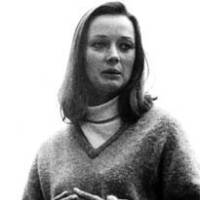
photo©ErlingMandelmann.ch / CC BY-SA 3.0
Niki de Saint Phalle (born Catherine Marie-Agnès Fal de Saint Phalle in Neuilly-sur-Seine on 29 October 1930; died in La Jolla, California, on 21 May 2002) was a self-taught French-American artist whose work moved from violence to joy: the rifle-fired Shooting Paintings (Tirs) of 1961, the voluptuous Nanas, and finally sculpture gardens and public fountains on a monumental scale. A member of Pierre Restany’s Nouveaux Réalistes and now recognised as a pioneer of feminist art, she was also a prolific printmaker whose colour screenprints, written by hand like letters, remain the most direct way to own her work.
Le Coin des Arts offers a selection of Niki de Saint Phalle prints spanning three decades: the letter-screenprints Dear Diana and L’arbre (1969), sheets from the Nana Power portfolio (1970), including Tea time (plate XIV) and Remember, Les Nanas au pouvoir, Daddy (1973), Dear Clarice (1983), Le Sida est là… préservons-nous (1988) and Les fiancés de Knokke (1993); the lithographs Pills (1970), Le Golem – Jérusalem (1972), Les Jouets, La Marchande and Méchant Méchant (1995); the offset Hommage à la vie (1975), and a bottle of her perfume. Each is chosen for freshness of colour, edition, provenance and condition.
Raised largely in the United States, she joined her parents in Greenwich, Connecticut, around 1933 and moved with them to Park Avenue in 1937. Expelled from the Convent of the Sacred Heart and later from the Brearley School (for painting the fig leaves on the school’s statues red), she worked as a fashion model and appeared on the cover of Life on 26 September 1949. At eighteen she married the writer Harry Mathews; the couple settled in Paris in 1952. A breakdown in 1953 led to treatment in a clinic in Nice, where painting became her therapy and her vocation. Living in Deià, Majorca, in the mid-1950s, she visited Gaudí’s Park Güell in Barcelona in 1955 and first dreamt of a garden of sculpture. Around the same time she met the Swiss sculptor Jean Tinguely.
Having separated from Mathews, she moved in 1960 into Tinguely’s studio in the Impasse Ronsin, Montparnasse. There, in February 1961, she staged her first public Tir: plaster reliefs concealing bags of paint, burst open with a rifle so that the picture appeared to bleed. Her exhibition at the Galerie J that summer invited visitors to shoot, and Pierre Restany asked her to join the Nouveaux Réalistes alongside Yves Klein, Arman and César. In August 1961 her Homage to Dalí, a fire-spitting bull, exploded after a bullfight in Figueres. A Shooting Picture of 1961 is today in the Tate collection and has been shown at Tate Modern. In 1963 she and Tinguely moved to Soisy-sur-École, south of Paris.
The first Nanas, inspired by Larry Rivers’s drawing of his pregnant wife Clarice, were shown at Iolas in Paris in September 1965. In 1966 she and Tinguely built Hon – en katedral for the Moderna Museet in Stockholm, a giant reclining woman that visitors walked into, housing a twelve-seat cinema, a planetarium and a small art gallery; more than 100,000 people visited in three months. The Stedelijk Museum, Amsterdam, held her first retrospective in 1967. Her Nanas were now cast in polyester, a material that would permanently damage her lungs. She married Tinguely on 13 July 1971. In 1972 Jerusalem’s mayor Teddy Kollek commissioned the Golem, a monster-slide for a children’s playground in Kiryat Hayovel. That year she also shot Daddy with the British film-maker Peter Whitehead, her partner at the time; it was screened in London in November 1972 before its New York Film Festival premiere in 1973, and the ICA gave its 4K restoration a UK premiere on 8 May 2026.
In 1978 she began the Tarot Garden at Garavicchio, near Capalbio in southern Tuscany: monumental figures based on the major arcana, clad in ceramic, mirror and glass. She lived inside The Empress for several years and launched her own perfume in 1982, together with prints and multiples, to fund the work. In 1983 the City of Paris unveiled the Stravinsky Fountain beside the Centre Pompidou: sixteen sculptures, seven by Tinguely, six by Saint Phalle and three made together. In 1986 she published AIDS: You Can’t Catch It Holding Hands with Dr Silvio Barandun, a picture book distributed in some 70,000 copies. Tinguely died in Bern on 30 August 1991.
Seeking a kinder climate for her lungs, she moved to La Jolla in 1994. The Tarot Garden opened to the public on 15 May 1998, the year the Espace Jean Tinguely – Niki de Saint Phalle opened in Fribourg. In 2000 she received the Praemium Imperiale for sculpture and became an honorary citizen of Hanover; in October 2001 she gave around 170 works, many of them prints, to the MAMAC in Nice. In Britain, the Tate Liverpool retrospective (1 February – 27 April 2008) was her first major UK exhibition after her death, and Glasgow’s Gallery of Modern Art holds her work. Later surveys followed at the Grand Palais (2014–15), the Guggenheim Bilbao (2015), MoMA PS1 (2021) and the Kunsthaus Zürich (2022).
Screenprinting was her natural idiom: flat, saturated colour and her own handwriting, so that a print such as Dear Diana reads like a letter scattered with hearts, snakes and Nanas. The Swiss printer Albin Uldry printed her late-1960s screenprints, including Last Night I Had a Dream (1968); the Nana Power portfolio (1970) was published by Éditions Essellier and printed by Michel Caza in Paris, in editions of 115 on Arches. For lithography she worked with Clot, Bramsen et Georges, who printed Pills (1970) for Galerie Alexandre Iolas; Le Golem – Jérusalem (1972) was issued in 125 impressions, and the five-sheet Méchant Méchant album (1995), published by Éditions de la Différence, in 250. Dear Clarice (1983) belongs to the Eight by Eight portfolio published by the Museum of Contemporary Art, Los Angeles.
The standard reference is the catalogue by D. Chenivesse and B. Kühn, Niki de Saint Phalle. Das graphische Werk 1968–1980 (Ulmer Museum, Ulm, 1980). A citation such as ‘Chenivesse 56’ identifies Tea time; Dear Diana is Chenivesse 41. Posters are listed in Posters (Prestel, 2005), cited as ‘Prestel 43’ and so on, while paintings and reliefs are covered by the Acatos catalogue raisonné 1949–2000 (2001).
Catalogue number. For prints of 1968–1980, check the Chenivesse/Kühn entry against the sheet’s size, colours and edition.
Edition. Nana Power sheets are numbered out of 115, the 1972 lithographs out of 125, the 1995 lithographs out of 250; some signed posters ran to 500. See the printing.
Signature. Most impressions are signed in pencil; a few 1969 screenprints, such as Dear Diana, are signed in felt-tip. The ‘Niki’ written inside the image is printed and is not a signature.
Colour and condition. Screenprint inks, some of them fluorescent, fade in daylight. Look for full margins and choose UV-filtering glazing; see our framing service.
Pitfalls. Unsigned posters, offsets and museum-shop reproductions are common; an offset such as Hommage à la vie should be described as one. Perfume bottles are collectables, not prints. Read our authenticity guarantee.
Our Niki de Saint Phalle prints sit alongside those of her circle: Jean Tinguely, Yves Klein, Arman, César and Yayoi Kusama. Explore New Realism and our engravings and lithographs.
D. Chenivesse and B. Kühn, Niki de Saint Phalle. Das graphische Werk 1968–1980, Ulm, Ulmer Museum, 1980 · Niki de Saint Phalle. Catalogue raisonné 1949–2000, Lausanne, Éditions Acatos, 2001 · Tate – Niki de Saint Phalle at Tate Liverpool, 2008 · Tate – Niki de Saint Phalle: Retrospective · ICA – Daddy, UK premiere · Niki Charitable Art Foundation

Secure payment
3DSecure 2.2

Free DHL Express delivery from €1,200
Carefully prepared parcel
Parcel tracking

Shipment insured
for the value of the artwork, covering theft and damages

Fairest prices
Certificate of authenticity
Two galleries in Paris
Receive an email as soon as a new artwork is added for this artist
Your message has been sent ! We will get back to you as soon as possible.
Please fill in the form if you need further information such
Please fill in your email address, an email will be sent with a link to update your password.
You can now place orders and track your orders.
To save your wishlist, you can log in or create an account :
This is a 100% custom-made frame, carefully crafted by a professional framer. Finishes are available in light oak, white wood or black wood, with or without mat board and plexiglass. Delivery times may vary depending on the order, with an average lead time of 10 days.
This option will be offered during the cart step.


