
(1900-1969)

POLIAKOFF Serge
Composition in blue, green and red, 1968
Aquatint LCD8348
9 800.00€


POLIAKOFF Serge
Red, green and blue composition, 1961
Lithograph LCD8508
5 000.00€


POLIAKOFF Serge
Composition in blue, red and black L75, 1969
Lithograph LCD8040
17 000.00€


POLIAKOFF Serge
Composition in blue, red , green and black III, 1958
Etching and aquatint LCD7628
9 500.00€
3


POLIAKOFF Serge
Green, blue, pink and yellow composition, 1964
Etching and aquatint LCD4892
6 500.00€
3


POLIAKOFF Serge
Blue, green and brown composition, 1968
Engraving LCD5800
6 500.00€

POLIAKOFF Serge
Composition bleue, grise et rouge XXVI, 1964
Etching and aquatint LCD5524
6 000.00€
3


POLIAKOFF Serge
Composition grise, rouge et jaune L27, 1960
Lithograph LCD4013


POLIAKOFF Serge
Composition bleue XXXIX, 1969
Etching and aquatint LCD8415
Sold

POLIAKOFF Serge
Red, gray, and black composition, 1960
Lithograph LCD7213
Sold

POLIAKOFF Serge
Composition orange et rouge XXIX, 1966
Engraving LCD4616
Sold
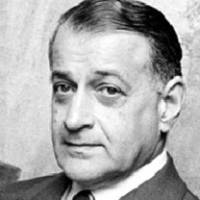
Serge Poliakoff, born in Moscow on 8 January 1900 and died in Paris on 12 October 1969, was one of the leading abstract painters of the post-war School of Paris. A Russian émigré who earned his living for three decades as a cabaret guitarist, he arrived at abstraction relatively late and built from it a language of rare restraint: interlocking flat shapes with softly irregular edges, their colour laid down in successive layers until it seems to glow from within. Alongside his paintings and gouaches he left a compact body of original prints – some eighty colour lithographs, around three dozen etchings and aquatints, and a handful of screenprints – which remain among the most sought-after abstract prints of the period.
Le Coin des Arts currently offers a choice of Poliakoff’s work selected for quality of impression, freshness of colour, condition and provenance: gouaches such as Composition abstraite (1956 and 1959) and Composition orangée (1960); lithographs including Composition jaune, orange et verte (L14, 1957), Composition bleue (L21, 1959), Composition rouge, verte et bleue (L32, 1961), Composition noire et blanche (L38, 1962) and the late Composition bleue (L71, 1969); etchings and aquatints such as Composition bleue II (1958), Composition verte, bleue, rose et jaune XXV (1964) and Composition bleue et rouge XXXI (1967); screenprints (L8, 1955; L65, 1967); the illustrated book Parménide (1964); the porcelain Diane (1968); posters; and all five volumes of the catalogue raisonné of the paintings.
The thirteenth of fourteen children, Poliakoff grew up in Moscow, painted his first landscapes near Nalchik in the northern Caucasus and was drawn equally to music and mathematics. The Revolution forced him out in 1918: travelling through the Caucasus with his aunt, the celebrated singer Nastia Poliakoff, whom he accompanied on the guitar, he reached Constantinople in 1919. The guitar would support him for more than thirty years. Their wanderings took them to Sofia, Belgrade, Vienna and Berlin, where he spent two years, before he settled in Paris in 1923, playing by night in the Russian cabarets.
After studying at the Académie de la Grande Chaumière from 1929 and the Académie Frochot in 1933, Poliakoff moved to London from 1935 to 1937. He enrolled at the Slade School of Fine Art; sources also mention the Chelsea School of Art and the Grosvenor School. The decisive encounter, however, took place at the British Museum, where the painted Egyptian sarcophagi showed him colour applied in superimposed layers – a principle that would underpin his mature painting. It was also in London that he married Marcelle Perreur-Lloyd, a Frenchwoman of Irish descent. Their son Alexis was born in 1942.
Back in Paris in 1937, Poliakoff became close to Wassily Kandinsky, to Sonia and Robert Delaunay, whose gatherings he attended, and to the sculptor Otto Freundlich. The Delaunays’ simultaneous contrasts and Freundlich’s interlocking colour-forms opened the way to abstraction. In 1945 the Galerie L’Esquisse showed his first abstract works, and in 1947 he received the Prix Kandinsky. His partnership with Dina Vierny began in 1951; around 1952 a contract with the Galerie Bing at last allowed him to give up the guitar. In 1953 his first major Belgian exhibition was held at the APIAW in Liège, the Palais des Beaux-Arts in Brussels and the Verviers museum.
From the late 1950s his reputation became truly international: documenta II (1959) and III (1964) in Kassel, a room of his own in the French pavilion at the 1962 Venice Biennale – the year he became a French citizen – the international prize of the Tokyo Biennale (1965), the Grand Prix of the Menton Biennale (1966), and retrospectives at the Kunstmuseum St. Gallen (1966) and the Maison de la Culture in Caen (1968). In Britain the landmark was the Whitechapel Gallery exhibition of 17 April to 19 May 1963, with a catalogue by the critic John Russell. The Tate holds his oil Abstract Composition (1954), and Aberdeen Art Gallery a print, Bande noire (c. 1965). He died in Paris on 12 October 1969, while preparing the major Paris exhibition shown in 1970. More recently, London’s Timothy Taylor gallery presented ‘Silent Paintings’ (2015), and the Musée d’Art Moderne de Paris mounted the retrospective ‘Le rêve des formes’ (2013-2014).
Poliakoff’s first print, a plate for the album Art abstrait (Éditions Opéra, printed by Desjobert), dates from 1946. Lithography suited him perfectly: each colour needs its own stone or plate, so the print is built up layer by layer, exactly like his canvases. Many of his lithographs were printed in Paris by the Pons workshop for publishers such as Nesto Jacometti (L’Œuvre gravée, Zurich) and the Galerie Cavalero in Cannes; others were issued by the Erker-Presse in St. Gallen or by the review XXe Siècle. The rarer etchings and aquatints often combine several plates; those for Parménide (La Rose des Vents, 1964, text by Pierre Albert-Birot) were printed by Jean Signovert.
Two catalogues raisonnés are standard: Yves Rivière, Serge Poliakoff. Les estampes (Arts et Métiers graphiques, Paris, 1974), and Alexis Poliakoff and Gérard Schneider, Serge Poliakoff: catalogue raisonné of the prints (Galerie française, Munich, 1998, in English, French and German). Their numbering largely coincides: arabic numerals for lithographs and screenprints (‘Rivière 14’), roman numerals for intaglio prints (‘Poliakoff-Schneider XXV’). Our references ‘L71’ or ‘XXXI’ follow this system.
Edition size. Editions generally range from 50 to 150 (50 for Cavalero, 75 for Erker-Presse, 125 or 150 for Jacometti), plus a few artist’s proofs marked ‘EA’. The numbering should match the catalogue (see the printing).
Signature. Genuine impressions are signed in pencil, usually lower right; a signature in the stone is not a substitute (see the signature).
Paper and condition. Arches, BFK Rives or Japan paper; full margins and unfaded colour are essential for an artist whose work depends on subtle tonal balance.
Catalogue number. Always ask for the Rivière or Poliakoff-Schneider reference, which confirms date, edition and publisher.
Pitfalls. Posthumous lithographs (some completed after 1969 from paintings and signed in the plate), ‘after’ prints, exhibition posters and unsigned plates from reviews or albums are not hand-signed original prints. Plates from Parménide belong to the book, which is signed at the justification.
Authentication. Paintings, gouaches and drawings are examined by the Committee and the Serge Poliakoff Archives; prints are authenticated by Le Coin des Arts. See also authenticity and framing.
Our Poliakoff prints are chosen for the quality of their printing and the preservation of their colour. Related artists: Nicolas de Staël, André Lanskoy, Hans Hartung, Pierre Soulages, Serge Charchoune and Alexis Poliakoff; see also School of Paris and lyrical abstraction and our etchings and lithographs.
Yves Rivière, Serge Poliakoff. Les estampes, Arts et Métiers graphiques, Paris, 1974 · Alexis Poliakoff and Gérard Schneider, Serge Poliakoff: catalogue raisonné of the prints, Galerie française, Munich, 1998 · Alexis Poliakoff, Serge Poliakoff. Catalogue raisonné, 5 vols, from 2005 · John Russell, Serge Poliakoff, Whitechapel Gallery, London, 1963 · Poliakoff, le rêve des formes, Paris Musées, 2013 · Tate – Abstract Composition, 1954 · Aberdeen Art Gallery – Serge Poliakoff · Musée d’Art Moderne de Paris – The Dream of Forms · Galerie Dina Vierny – Serge Poliakoff

Secure payment
3DSecure 2.2

Free DHL Express delivery from €1,200
Carefully prepared parcel
Parcel tracking

Shipment insured
for the value of the artwork, covering theft and damages

Fairest prices
Certificate of authenticity
Two galleries in Paris
Receive an email as soon as a new artwork is added for this artist
Your message has been sent ! We will get back to you as soon as possible.
Please fill in the form if you need further information such
Please fill in your email address, an email will be sent with a link to update your password.
You can now place orders and track your orders.
To save your wishlist, you can log in or create an account :
This is a 100% custom-made frame, carefully crafted by a professional framer. Finishes are available in light oak, white wood or black wood, with or without mat board and plexiglass. Delivery times may vary depending on the order, with an average lead time of 10 days.
This option will be offered during the cart step.


