
(1923-1995)
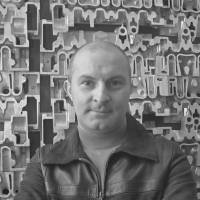
Jack de Nijs for Anefo, CC0, via Wikimedia Commons
Arman (Armand Pierre Fernandez, born in Nice on 17 November 1928, died in New York on 22 October 2005) was one of the founders of Nouveau Réalisme, the French answer to the object-based art of the early 1960s. Rather than paint objects, he used them: he amassed them in glass and Perspex cases (Accumulations), emptied waste-paper baskets into boxes (Poubelles), smashed them (Colères), sliced them (Coupes) and set them alight (Combustions). Alongside this sculpture he produced a substantial body of original prints – lithographs, screenprints, etchings and multiples – recorded in a catalogue raisonné.
Le Coin des Arts follows Arman’s work and offers his original prints as they become available, selected, like all our pieces, for quality of impression, edition, provenance and condition. To be told when a new work arrives, simply ‘follow the artist’ on this page.
The son of Antonio Fernandez, an antiques dealer and amateur painter who taught him oil painting and photography, Armand passed his baccalauréat in 1946 and enrolled at the École nationale des arts décoratifs in Nice. In 1947, at judo classes held at the Nice police school, he met Yves Klein and the poet Claude Pascal. From 1949 he studied archaeology and Asian art at the École du Louvre; he taught judo in Madrid in 1951 and served as a medical orderly during the Indochina War. An exhibition of Kurt Schwitters prompted his first Cachets in 1954: sheets and canvases covered with the repeated impressions of office rubber stamps, a kind of printmaking before the fact. A printer’s error on an invitation card for the Galerie Iris Clert, which left out the ‘d’ of his first name, gave him, around 1958, the name by which he is known.
After the Allures – traces left by inked objects thrown or dragged across paper and canvas – he made his first Poubelles and Accumulations in 1959; Allures d’objets was shown at the Galerie Saint-Germain in Paris in 1960. On 25 October 1960 he filled Iris Clert’s gallery with rubbish: Le Plein (‘Full Up’) was the counterpart of Klein’s empty gallery, Le Vide, of 1958, and in 1976 Arman recreated the front window of Le Plein at the Venice Biennale. Two days later, on 27 October 1960, he signed the founding declaration of Nouveau Réalisme with Raymond Hains, Martial Raysse, Daniel Spoerri, Jean Tinguely, Jacques Villeglé and the critic Pierre Restany. The first public Colère, in which he smashed furniture, took place at a New Realist festival near Nice on 13 July 1961. That autumn he discovered New York, where the Museum of Modern Art included him in The Art of Assemblage; from 1962 he welded metal objects and set them in polyester. He left the group in 1963.
For the rest of his life Arman divided his time between the Côte d’Azur and Manhattan, where he settled with his family in 1963 and later became an American citizen. He showed at documenta in Kassel in 1964, 1968 and 1977, and at the Venice Biennale. From 1967 Renault supplied him with new car parts, and the Accumulations Renault toured European museums from 1969, starting at the Stedelijk Museum in Amsterdam. His public works became monumental: Long Term Parking (completed 1982) at Jouy-en-Josas, near Paris, sets some sixty cars in 1,600 tonnes of concrete; L’Heure de tous and Consigne à vie, towers of bronze clocks and suitcases, were unveiled at the Gare Saint-Lazare in July 1985; Hope for Peace (1995) in Beirut embeds tanks in a concrete tower. Retrospectives followed in Hanover (Parade der Objekte, 1982), Houston, Brooklyn and Detroit (1991-1992).
Britain discovered Arman early. In 1964 he was included in Painting and Sculpture of a Decade: 1954-1964 at the Tate Gallery, a survey of the decade’s international art. The Tate now holds two characteristic works: Condition of Woman I (1960), an early assemblage of found objects in a glazed box, and Bluebeard’s Wife (1969), shaving brushes set in polyester resin. In June 1997 the James Mayor Gallery in London showed Arman: Accumulations in Relation, and Connaught Brown presented Arman – Peintre in 2008, a reminder that he also worked in paint. In Paris, the Galerie nationale du Jeu de Paume gave him his first museum retrospective in the city in 1998; after his death, the Centre Pompidou devoted 120 works to him from 22 September 2010 to 10 January 2011, before the exhibition moved to the Museum Tinguely in Basel.
Arman’s prints restate the themes of his sculpture – accumulated paint tubes and brushes, cut violins, watches, weapons – in lithography, screenprinting (often with embossing or collage) and intaglio. The standard reference is Jane Otmezguine and Marc Moreau, Arman: Estampes, catalogue raisonné 1960-1990 (Paris, Marval, 1990), a bilingual French-English volume of 284 entries. A reference such as ‘Otmezguine/Moreau 248’ identifies Le Traité du violon (Nice, Bernard Lucas, 1979), a portfolio of 12 drypoints and 12 lithographs with a text by Maurice Roche, issued in 75 copies. No. 11, École de Nice I, is a lithograph published by Galerie Alexandre de la Salle and printed in Vence. He also made multiples, such as the cut shoes in a box issued by Daniel Spoerri’s Edition MAT in 1965. Prints made after 1990 fall outside the catalogue. The printed work has had its own exhibitions: a print retrospective at Galerie Alexandre de la Salle in Saint-Paul-de-Vence in 1976, Estampes 1960-1990 at the Musée de l’Arsenal in Gravelines, home of a museum devoted to drawing and the original print, in 1990, and Les estampes d’Arman at the Musée Déchelette in Roanne in 1992.
The catalogue number. For prints of 1960-1990, check that the Otmezguine/Moreau number agrees with the title, technique, dimensions and edition stated.
Edition and numbering. Editions vary widely: 90 plus 8 artist’s proofs for a 1976 etching, 75 for Le Traité du violon, several hundred for some later screenprints. See the printing.
Signature. Arman generally signed his prints in pencil. A signature printed in the image is not a hand signature; be wary of sheets signed by several artists where not every signature is guaranteed.
Offsets and posters. A few signed and numbered offsets appear in the catalogue and should be described as such; unsigned exhibition posters are reproductions, not original prints.
Unique works. A Cachet, Allure or Colère on paper is a unique work rather than a print, and is documented by the Arman Studio archives in New York or the archives of Denyse Durand-Ruel. See our authenticity page.
Condition. Embossed and collaged sheets are easily flattened or scuffed; look for full margins and no light-staining, and choose a deep mount when framing.
The gallery also selects prints by Arman’s companions in Nouveau Réalisme and the Nice scene: Yves Klein, Jean Tinguely, Niki de Saint Phalle, César and Bernar Venet. Explore New Realism and our engravings and lithographs.
Jane Otmezguine and Marc Moreau, Arman: Estampes, catalogue raisonné 1960-1990, Paris, Marval, 1990 · Tate – Arman · Fondation A.R.M.A.N. – Chronology · Galerie Vallois – Biography and exhibitions · Centre Pompidou – Arman, 2010 · MoMA – Arman’s Multiples

Secure payment
3DSecure 2.2

Free DHL Express delivery from €1,200
Carefully prepared parcel
Parcel tracking

Shipment insured
for the value of the artwork, covering theft and damages

Fairest prices
Certificate of authenticity
Two galleries in Paris
Receive an email as soon as a new artwork is added for this artist
Your message has been sent ! We will get back to you as soon as possible.
Please fill in the form if you need further information such
Please fill in your email address, an email will be sent with a link to update your password.
You can now place orders and track your orders.
To save your wishlist, you can log in or create an account :
This is a 100% custom-made frame, carefully crafted by a professional framer. Finishes are available in light oak, white wood or black wood, with or without mat board and plexiglass. Delivery times may vary depending on the order, with an average lead time of 10 days.
This option will be offered during the cart step.