
(1924-2003)
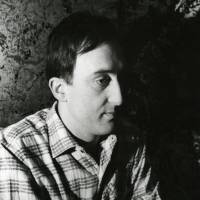
Portrait d'Enrico Baj par Paolo Monti, 1955 - CC BY-SA 4.0, Civico Archivio Fotografico of Milan
Enrico Baj was born in Milan on 31 October 1924 and died at Vergiate, in the province of Varese, on 16 June 2003. A painter, printmaker, sculptor and writer, he co-founded Nuclear Art in 1951, worked alongside Asger Jorn and the Surrealists, and became a leading figure of Italian ’pataphysics. He is best remembered for his Generals: pompous, bemedalled figures built from braid, buttons and upholstery fabric, a sustained satire of militarism. In Britain he is represented at Tate and the British Museum, and his original prints – more than 600 recorded by 1986 – remain the most accessible way to collect his work.
Le Coin des Arts follows Baj’s work closely and offers his original etchings, lithographs and collaged screenprints whenever good impressions come our way, chosen, like everything we sell, for printing quality, edition, provenance and condition. To be told when one arrives, simply click ‘follow the artist’ on this page.
Baj came from a prosperous Milanese family and was painting by the age of fourteen. In 1944 he left for Geneva to avoid being called up into the army of Mussolini’s Republic of Salò. After the war he studied at the Brera Academy (1945-1948) while reading law at the University of Milan, then gave up the law for painting around 1950. His first solo exhibition, at the Galleria San Fedele in Milan, came in 1951, the year he launched the Movimento Arte Nucleare with Sergio Dangelo. Their dripping, exploding canvases were a protest against both geometric abstraction and the threat of atomic war, and the British Museum’s print catalogue sums up the stance that followed: Baj remained, for the rest of his career, an opponent of abstraction.
Meeting the Danish painter Asger Jorn in 1953 drew Baj into the orbit of the former CoBrA group. Together they founded the International Movement for an Imaginist Bauhaus, opposing the forced rationalisation of art. In 1954 Baj organised an international ceramics meeting at Albisola on the Ligurian coast, and ceramics remained part of his practice for life. His Mountains (1957-1959) used printed furnishing fabric for the sky; the Modifications (1959-1960), developed in dialogue with Jorn, were junk-shop landscapes invaded by his fantastical ‘Ultrabodies’ (Ultracorpi).
From about 1959 the Generals and, soon after, the Ladies took over: collaged portraits of military and society figures made of felt, cord, lace, mirrors and real medals. A characteristic example in a British collection is Fire! Fire! (1963-1964), now at Tate Modern. André Breton and Marcel Duchamp included Baj in Surrealist Intrusion in the Enchanters’ Domain in New York in 1960, and Breton wrote a text on him in 1963. In 1963 Baj founded the Milanese pataphysical institute, the Institutum Pataphysicum Mediolanense, and he held the rank of Satrap in the Paris Collège de ’Pataphysique. The 1964 Venice Biennale gave him a room of his own, and in 1966 he illustrated Raymond Queneau’s Meccano with engravings made from the metal parts of the toy itself.
In 1967 Baj moved to an Art Deco villa at Vergiate, his home until his death, and began a lifelong partnership with the Milanese dealer Giorgio Marconi. Major surveys followed in 1971 at Palazzo Grassi in Venice, the Museum of Contemporary Art in Chicago and the Musée de l’Athénée in Geneva. His most famous political work, The Funeral of the Anarchist Pinelli (1972), a twelve-metre frieze of cut-out figures commemorating the railway worker Giuseppe Pinelli, who died in police custody in Milan in 1969, was due to open at Palazzo Reale on 17 May 1972; the show was cancelled that day after the murder of police officer Luigi Calabresi. The work was not shown there until 2012 and has hung in the Museo del Novecento since 2025. Later Baj designed the sets for Jarry’s Ubu Roi (1984) and, in 1989, thirty marionettes for Lorenzo Ferrero’s opera Le Bleu-blanc-rouge et le noir, to a libretto by the English novelist Anthony Burgess. In 1999 he painted 164 portraits inspired by Proust’s Guermantes, and his last canvases attacked the election of Silvio Berlusconi; the Palazzo delle Esposizioni in Rome staged a retrospective in 2001-2002. In October 2017 Luxembourg & Dayan recreated the interiors of the Vergiate villa on their stand at Frieze Masters in Regent’s Park, introducing his Generals and Ladies to a new London audience.
Baj’s first prints were the etchings for Lucretius’ De Rerum Natura (1952-1954); the British Museum owns the complete portfolio. Colour lithographs followed from 1955. His key printer was Giorgio Upiglio, whose Milan workshop Grafica Uno (founded 1962) printed many of his intaglio prints, among them a 1963 colour etching published by Berggruen and Schwarz and the fifteen etchings of Chapeaugaga (1970), with a text by André Pieyre de Mandiargues. Swiss and British links run through the print oeuvre too: the Bern dealer Eberhard Kornfeld published Baj’s plates for One Cent Life (1964), and the British Museum holds his 1972 multiple Horatius Nelson Duke of Bronte, titled after Britain’s naval hero. From the late 1960s Baj made his name with multi-material screenprints enriched with collage, flocking, fabric, braid and relief elements, while Studio Marconi issued multiples such as Baj at Marconi’s (1969). He also produced well over seventy artists’ books. Two catalogues raisonnés are essential: Jean Petit, Baj, catalogue de l’œuvre graphique et des multiples (2 vols, Geneva, 1970-1974, covering 1952-1973) and Baj: Catalogo generale delle stampe originali (Electa, Milan, 1986), with texts by Roberto Sanesi and Jan van der Marck, recording some 640 prints. For context, see Martin Hopkinson’s Italian Prints 1875-1975 (British Museum Press, 2007).
Check the catalogue. Ask for the Petit or Electa reference; Electa, for instance, lists the 1971 screenprint Anamorfosi di generale as no. 323. It confirms date, technique, publisher and edition size.
Edition and numbering. Editions range from tiny runs (a 1965 lithograph numbered out of 10) to 75 or 100 impressions for later screenprints. See the printing.
Signature. Look for a pencil signature, usually lower right. A signature in the colophon of a book applies to the book, not to a loose plate; see the signature.
Collage elements. On mixed-media screenprints, every applied piece of fabric, flock or metal should be present and firmly attached; losses and re-gluing matter.
Beware of posters. Offset exhibition posters, however attractive, are reproductions, not original prints.
Framing. Relief collage needs a deep spacer so nothing touches the glazing; see our framing advice and our authenticity guarantee.
Explore Baj’s circle on our site: Karel Appel, Corneille and Pierre Alechinsky of CoBrA, the Surrealist Roberto Matta and his fellow Upiglio artist Valerio Adami, or browse our etchings and lithographs.
Jean Petit, Baj, catalogue de l’œuvre graphique et des multiples, 2 vols, Geneva, Éditions Rousseau, 1970-1974 · Baj: Catalogo generale delle stampe originali, Milan, Electa, 1986 · Martin Hopkinson, Italian Prints 1875-1975, London, British Museum Press, 2007 · British Museum – Enrico Baj · Tate – Enrico Baj · Fondazione Marconi – Enrico Baj · The Art Newspaper – the Pinelli funeral, 2025 · USI – Giorgio Upiglio, printer

Secure payment
3DSecure 2.2

Free DHL Express delivery from €1,200
Carefully prepared parcel
Parcel tracking

Shipment insured
for the value of the artwork, covering theft and damages

Fairest prices
Certificate of authenticity
Two galleries in Paris
Receive an email as soon as a new artwork is added for this artist
Your message has been sent ! We will get back to you as soon as possible.
Please fill in the form if you need further information such
Please fill in your email address, an email will be sent with a link to update your password.
You can now place orders and track your orders.
To save your wishlist, you can log in or create an account :
This is a 100% custom-made frame, carefully crafted by a professional framer. Finishes are available in light oak, white wood or black wood, with or without mat board and plexiglass. Delivery times may vary depending on the order, with an average lead time of 10 days.
This option will be offered during the cart step.



