(1923-1994)

FRANCIS Sam
Damp (SF 90), 1969
Lithograph LCD4962
3 800.00€

Sam FRANCIS
Untilted (L.II P-3), 1968
Sold

Sam FRANCIS
Sans Titre (SF 109), 1971
Sold
Looking for a similar artwork?
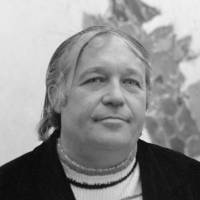
Portrait de Sam Francis, Eric Koch / Anefo / NationaalArchief, 1968 — CC BY-SA 3.0 NL
Sam Francis was born in San Mateo, California, on 25 June 1923 and died in Santa Monica on 4 November 1994. A Californian who made his name in Paris in the 1950s, he became one of the most admired colourists of post-war abstraction, known for luminous fields of liquid colour, scattered blots and ever larger areas of bare white. He was equally committed to printmaking, producing more than 500 print editions – above all colour lithographs, but also etchings, aquatints, screenprints and monotypes – which makes his graphic work one of the richest of his generation.
Le Coin des Arts currently offers Sam Francis’s colour lithograph Damp (1969), carrying the studio number SF-90 and catalogued by Connie W. Lembark as L104. Printed at the Tamarind workshop in Los Angeles, it was chosen, like every print we handle, for the quality of the impression, the edition, its provenance and its condition. To be told when new work arrives, click ‘follow the artist’.
Francis went to the University of California, Berkeley, to read botany, medicine and psychology. Serving with the US Army Air Corps, he injured his back on a training flight in 1943 and spent several years in hospital, where he began to paint, at first as therapy. Back at Berkeley he took a degree in art in 1949 and a master’s degree in 1950. The Reina Sofía in Madrid has suggested that the pilot’s view from the air runs through his work from the start, as early as the small gouache California Grey Coast of 1947.
He settled in Paris in 1950 and soon knew Al Held, Joan Mitchell and Jean-Paul Riopelle. His first solo shows, at the Galerie Nina Dausset and the Galerie du Dragon in 1952, were of near-monochrome white and grey canvases; the critic Michel Tapié and Claude Duthuit championed him, and his work was associated with Tachisme. Studying Monet’s water lilies pushed him back towards strong colour and a much larger scale. In December 1954 Arnold Rüdlinger, director of the Kunsthalle Bern, and the dealer Eberhard W. Kornfeld visited his studio, and Bern showed his paintings in ‘Tendances actuelles 3’ in 1955. In 1956 the Museum of Modern Art in New York, which had acquired Big Red (1953), included him in ‘Twelve Americans’, and Time magazine called him the hottest American painter in Paris.
Britain discovered him early. Gimpel Fils gave him a solo exhibition in London in 1957, and he was one of the seventeen painters in ‘The New American Painting’, the touring show organised by MoMA’s International Programme, which opened at the Kunsthalle Basel in April 1958 and reached the Tate Gallery from 24 February to 22 March 1959, drawing a record 14,718 visitors. Meanwhile Rüdlinger, by then at the Kunsthalle Basel, had commissioned three murals in late 1956; painted in Paris in 1956-58, they hung in the museum’s stairwell until 1964 and were later dispersed – Basel Mural I is now at the Norton Simon Museum, Pasadena, Basel Mural II at the Stedelijk Museum, Amsterdam. In 1957 he spent time in Mexico, New York and Japan, painting a first mural in Tokyo; Japanese art confirmed his love of empty space and thinned colour. A mural for the Chase Manhattan Bank, New York, followed in 1959, as did documenta II in Kassel and the São Paulo Biennial. Seriously ill in 1961, he was treated in a Bern hospital, the period that gave rise to his ‘Blue Balls’ series.
From 1962 Francis based himself in Santa Monica, while returning often to Japan: he married the Japanese artist Mako Idemitsu in 1966 and lived mainly in Tokyo in 1973-74. He took part in documenta III (1964), and retrospectives followed at the Museum of Fine Arts, Houston (1967), the Kunsthalle Basel (1968) and the Albright-Knox Art Gallery, Buffalo (1972). The ‘Edge’ paintings gave way in the early 1970s to the ‘Fresh Air’ pictures and the ‘Matrix’ grids, shaped by the Jungian analysis he began in 1971. In 1984 he founded The Lapis Press to publish artists’ books. Ill with cancer and unable to use his right hand, he painted about 150 small works with his left hand in his final year. London has kept faith with him: the Bernard Jacobson Gallery has shown his work repeatedly since 1989.
Encouraged by Kornfeld, Francis made his first lithographs in Zurich in 1960 with the printer Emil Matthieu, published by Kornfeld and Klipstein, Bern; First Stone opened the series. In 1963 he spent six months at the Tamarind Lithography Workshop, founded in Los Angeles by June Wayne in 1960, working almost entirely in tusche washes. Damp was printed there in 1969 by Dan Socha. At Gemini G.E.L. he made Spleen (1971), at more than six feet across his largest print to that date. In 1970 he opened his own workshop, The Litho Shop in Santa Monica, where Hitoshi Takatsuki and then George Page printed his lithographs for over twenty years; from 1981 Jacob Samuel added intaglio, mainly aquatint. His monotypes are the subject of Pontus Hulten’s The Monotypes of Sam Francis (1994).
The Tate holds six works, among them Around the Blues (1957, 1962-3), in oil and acrylic on canvas, and Painting (1957), alongside lithographs including Blue Blood Stone (1960) and White Bone (1971), a good guide to the range of his prints. The standard reference is Connie W. Lembark, The Prints of Sam Francis: A Catalogue Raisonné 1960-1990 (New York, Hudson Hills Press, 1992), in two volumes: lithographs, with an essay by Ruth E. Fine; then intaglio prints, screenprints and posters. Lithographs carry an ‘L’ number – ‘Lembark L1’ is First Stone, ‘L104’ is Damp. Dealers also quote studio ‘SF’ numbers (Damp is SF-90, Veiled Sail SF-91, which is L105): useful, but not the catalogue number.
Check the catalogue. For 1960-1990, the Lembark number, SF number, title, date, size and workshop should all agree. Prints after 1990 are not in the 1992 catalogue.
Edition. Editions are often small: 20 is quoted for Damp, 75 for The White Line (1960). Colour trial proofs, of which Francis made many, sit outside the edition and should be marked as such. See the printing.
Signature. Look for a pencil signature; the National Gallery of Art’s impression of Damp is signed ‘Sam Francis’ and inscribed ‘Tam Imp’ in graphite. More on the signature.
Paper and condition. Large sheets, often BFK Rives, are printed to the edge: in such pale colour, where the white of the paper is part of the image, fading, light staining and trimmed margins matter a great deal.
Posters. Lembark lists posters too; being catalogued does not turn a poster into an original print, and offset exhibition posters are reproductions.
Unique works. Monotypes and gouaches are one-offs and belong to the Sam Francis Foundation’s archive, not the print catalogue. Read our authenticity guarantee and framing advice.
We select Sam Francis lithographs alongside other masters of gestural abstraction: Jean-Paul Riopelle, Adolph Gottlieb, Hans Hartung, Zao Wou-Ki and Pierre Soulages. Explore the School of Paris and Lyrical Abstraction or all our engravings and lithographs.
Connie W. Lembark, The Prints of Sam Francis: A Catalogue Raisonné 1960-1990, New York, Hudson Hills Press, 1992 · Debra Burchett-Lere (ed.), Sam Francis: Catalogue Raisonné of Canvas and Panel Paintings, 1946-1994, University of California Press, 2011 · Tate – Sam Francis · Tate – The New American Painting, 1959 · National Gallery of Art – Damp · Kunstmuseum Bern – Sam Francis and Berne · Sam Francis Foundation

Secure payment
3DSecure 2.2

Free DHL Express delivery from €1,200
Carefully prepared parcel
Parcel tracking

Shipment insured
for the value of the artwork, covering theft and damages

Fairest prices
Certificate of authenticity
Two galleries in Paris
Receive an email as soon as a new artwork is added for this artist
Your message has been sent ! We will get back to you as soon as possible.
Please fill in the form if you need further information such
Please fill in your email address, an email will be sent with a link to update your password.
You can now place orders and track your orders.
To save your wishlist, you can log in or create an account :
This is a 100% custom-made frame, carefully crafted by a professional framer. Finishes are available in light oak, white wood or black wood, with or without mat board and plexiglass. Delivery times may vary depending on the order, with an average lead time of 10 days.
This option will be offered during the cart step.