
(1909-2005)

MUSIC Zoran
Becco di Mezzodi, 1975
Etching and aquatint LCD8491
900.00€


MUSIC Zoran
Jardins déserts peut-être, 1976
Engraving LCD5592
450.00€

MUSIC Zoran
Jardins déserts peut-être, 1976
Engraving LCD5596
450.00€

MUSIC Zoran
Jardins déserts peut-être, 1976
Engraving LCD5593
450.00€

MUSIC Zoran
Deserted gardens perhaps. Music, Zoran - Lescure, Jean, 1976
Illustrated Book LCD5085
3 700.00€
2


MUSIC Zoran
Jardins déserts peut-être, 1976
Engraving LCD5594
Sold


MUSIC Zoran
Jardins déserts peut-être, 1976
Engraving LCD5595
Sold
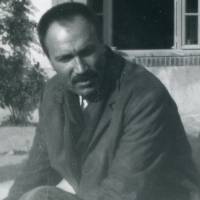
Portrait de Zoran Music par Michel-Georges Bernard — CC BY-SA 3.0
Painter, draughtsman and printmaker, Zoran Mušič (1909-2005) – known in France and on most print catalogues simply as Zoran Music – was born a subject of the Austro-Hungarian Empire and spent his working life between Venice and Paris. He belongs to the generation of the post-war School of Paris, yet his art stands apart: sun-bleached Dalmatian hills, Venetian lagoons, late self-portraits and, above all, the memory of Dachau, where he was imprisoned in 1944-45. That memory gave rise to his celebrated cycle We Are Not the Last. A gifted etcher, he won the Grand Prize for printmaking at the 1956 Venice Biennale.
In Paris, Galerie Le Coin des Arts offers a choice of original etchings and drypoints by Zoran Mušič, pencil-signed by the artist, together with the illustrated book Jardins déserts peut-être and an exhibition poster. Each sheet is chosen for the quality of the impression, its provenance and its condition.
Anton Zoran Mušič was born on 12 February 1909 in Bukovica, a village near Gorizia, then part of Austria-Hungary and today in Slovenia. Both his parents were Slovene schoolteachers. The First World War and the redrawing of frontiers that followed kept the family on the move – to Styria, to Griffen in Austrian Carinthia, and finally to Lower Styria. He finished secondary school in Maribor in 1928. As a boy he had seen paintings by the Vienna Secession, notably Klimt and Schiele, an early influence he never quite shed.
Mušič enrolled at the Academy of Fine Arts in Zagreb in 1930, studying under Ljubo Babić. In 1935 he travelled to Spain, where he spent long days at the Prado copying Goya, Velázquez and El Greco, and followed El Greco to Toledo. Goya’s unflinching gaze would remain with him to the very end.
Back in Yugoslavia, after military service, he spent his summers in Dalmatia, around Korčula. The bare Karst hills, the donkeys and horses, and the black-clad peasant women became the motifs to which he returned throughout his career. In 1942 he painted frescoes in churches around Gorizia.
Mušič first saw Venice in October 1943 and held an exhibition there in 1944. That autumn he was arrested by the Gestapo on suspicion of anti-German activity, held in Trieste and, in November 1944, deported to Dachau.
In the camp he drew in secret, on scraps of paper and at the risk of his life: prisoners, the dying, heaps of corpses. Of the nearly two hundred drawings he made, only part survived. The camp was liberated by American troops on 29 April 1945.
Settling in Venice in the autumn of 1945, he married the Venetian painter Ida Cadorin Barbarigo in 1949. His first etchings and drypoints date from 1947, his first lithographs from 1948. In 1951 he shared the Prix de Paris, awarded at Cortina d’Ampezzo, with Antonio Corpora, which led to his first show at the Galerie de France in Paris in 1952.
From then on Paris was his principal base, though he never gave up his Venetian studio. He took part in documenta in Kassel in 1955 and 1959, and in 1956 received the Grand Prize for printmaking at the Venice Biennale. His canvases of the 1950s and 1960s dissolved landscape into a lyrical abstraction of earth, hills and stone.
In 1970, a quarter of a century after his liberation, Mušič returned to the camp in the cycle Nous ne sommes pas les derniers (We Are Not the Last, 1970-76) – paintings, drawings and prints whose title warns that such horrors may happen again. Later came cycles of rocky landscapes, the Giudecca Canal, Cathedral Interiors (from 1982), The Studio (1983) and searching self-portraits.
British audiences rediscovered him in 2000, when the Estorick Collection in London staged what it described as the first exhibition of his work in Britain for over half a century. In France, the Grand Palais had mounted a major retrospective in 1995, opened by François Mitterrand. He died in Venice on 25 May 2005, aged 96.
Printmaking runs through Mušič’s entire output. He favoured intaglio – etching, drypoint and aquatint, ideally suited to his nervous line and velvety greys – and also worked in lithography. His plates were printed in Paris by the renowned Atelier Lacourière, later Lacourière et Frélaut.
His main publishers included the Galerie de France – Ombre sur le Carse (1958) was issued in a print run of 300 – and the Galerie Schmücking in Braunschweig, Germany. The plates of We Are Not the Last, etched from 1970 and published by Lacourière-Frélaut, translate the emaciated figures of the Dachau drawings into copper. Tate holds eleven works by Music, including several prints from this series dated 1970 and 1975, which may be seen by appointment in the Prints and Drawings Room at Tate Britain.
Among his illustrated books, Jardins déserts peut-être (1976) pairs a poem by Jean Lescure with ten original drypoints, in an edition of 115 on Rives wove paper, published by Schmücking. The early prints are catalogued in Rolf Schmücking, Music. Das graphische Werk 1947 bis 1962 (Braunschweig, 1962), cited as “Schmücking no.”
An etching by Mušič is a rare chance to own a piece of an œuvre held by Tate, the Centre Pompidou and the Albertina. Before buying, check:
The technique (etching, drypoint, aquatint or lithograph); the print run and the numbering (artist’s proof, hors commerce); the pencil signature; the Schmücking catalogue number for prints of 1947-62; the publisher and printer; the paper, often Rives or BFK Rives; and provenance and condition – foxing, light-staining, trimmed margins. With drypoint, the freshness of the impression matters: the burr wears quickly at the press.
Original print or reproduction?An original print is made by the artist on the plate and printed under his supervision. Exhibition posters and photomechanical reproductions of his paintings also circulate: they are neither numbered nor etched and should never be sold as original prints.
Galerie Le Coin des Arts selects every Mušič print with care for its authenticity, provenance and condition, and can advise on framing and mounting. You may also enjoy prints by Jean Bazaine, Alfred Manessier, Zao Wou-Ki, Maria Helena Vieira da Silva and Serge Poliakoff.
Wikipedia, Zoran Mušič · Tate, Zoran Music · Estorick Collection, Zoran Music (2000) · Larousse, Dictionnaire de la peinture · Rolf Schmücking, Music. Das graphische Werk 1947 bis 1962, Braunschweig, 1962.

Secure payment
3DSecure 2.2

Free DHL Express delivery from €1,200
Carefully prepared parcel
Parcel tracking

Shipment insured
for the value of the artwork, covering theft and damages

Fairest prices
Certificate of authenticity
Two galleries in Paris
Receive an email as soon as a new artwork is added for this artist
Your message has been sent ! We will get back to you as soon as possible.
Please fill in the form if you need further information such
Please fill in your email address, an email will be sent with a link to update your password.
You can now place orders and track your orders.
To save your wishlist, you can log in or create an account :
This is a 100% custom-made frame, carefully crafted by a professional framer. Finishes are available in light oak, white wood or black wood, with or without mat board and plexiglass. Delivery times may vary depending on the order, with an average lead time of 10 days.
This option will be offered during the cart step.