(1889-1963)
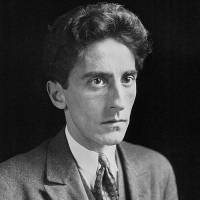
Jean Cocteau, 1923 – Agence Meurisse / BnF – Domaine public
Jean Cocteau (born 5 July 1889 at Maisons-Laffitte, near Paris; died 11 October 1963 at Milly-la-Forêt) is remembered as a poet, novelist, playwright and film-maker, yet the thread running through everything he did was drawing. The author of the scenario for Parade, of Les Enfants terribles and of the film La Belle et la Bête also produced posters, albums of drawings, original colour lithographs printed by Mourlot, illustrated books, ceramics, tapestries, chapel murals and stained glass. Britain holds a particular place in that story: Oxford gave him an honorary degree, and a London church still houses his only public work in the United Kingdom.
Le Coin des Arts follows Cocteau’s work and offers his original lithographs and illustrated books as and when they become available, chosen, like everything we handle, for quality of impression, edition, provenance and condition. If you would like to be told when one arrives, simply ‘follow the artist’ on this page.
Brought up between Maisons-Laffitte and Paris, Cocteau was expelled from the Lycée Condorcet in 1904 and made his literary début in April 1908, when the actor Édouard de Max organised a reading of his poems at the Théâtre Femina. His first contribution to the visual arts came three years later. In 1911 he drew two lithographic posters for Serge Diaghilev’s Ballets Russes at Monte Carlo, one showing Nijinsky in Le Spectre de la rose, the other Tamara Karsavina. The images were reused in 1913 for the great poster of the company’s season at the Théâtre des Champs-Élysées, the season of The Rite of Spring, printed by Verneau and Chachoin. A copy of that poster is in the Theatre and Performance collection of the Victoria and Albert Museum, given by the ballet critic Richard Buckle and Lucienne Astruc. By 1914 Cocteau had also prepared Le Potomak, a hybrid book of prose and drawings proofed at the Mercure de France.
On 18 May 1917 the Ballets Russes premiered Parade at the Théâtre du Châtelet: scenario by Cocteau, music by Erik Satie, choreography by Léonide Massine, curtain, sets and costumes by Pablo Picasso. The production made Cocteau a go-between for the avant-garde and a wider public. Le Potomak finally appeared in 1919, and in 1923 the publisher Stock issued Dessins, a volume of line drawings, portraits and caricatures reprinted the following year. That book is important for collectors because it shows the style later carried into lithography; it is not, however, a book of prints, since the drawings are reproduced. The 1920s closed with Orphée (the play, 1926) and Les Enfants terribles (1929), both of which he would later illustrate.
Le Sang d’un poète, shot in 1930, opened a film career that peaked with La Belle et la Bête (1946) and Orphée (1950). The same year Stock published Opium, the journal of his detoxification. After the war came his most ambitious illustrated book: Drôle de ménage, published in 1948 by Paul Morihien, with 29 colour lithographs and a lithographed cover, printed by Union et Mourlot frères in an edition of 2,720 copies, the first 720 on Rives wove paper.
From the spring of 1950 Cocteau was the guest of Francine Weisweiller at the Villa Santo Sospir, Saint-Jean-Cap-Ferrat, whose walls he covered with tempera paintings. Decorations followed at the Chapelle Saint-Pierre, Villefranche-sur-Mer (1956-1957), the wedding hall of Menton town hall (1957-1958) and the Chapelle Saint-Blaise-des-Simples at Milly-la-Forêt, where he is buried. He was received into the Académie française on 20 October 1955. On 12 June 1956 the University of Oxford conferred on him an honorary Doctorate of Letters, a degree championed by Enid Starkie of Somerville; two days later he lectured at the Taylor Institution on ‘La Poésie ou l’invisibilité’, published that year as Le Discours d’Oxford. Between 3 and 11 November 1959, at the invitation of the French Embassy’s cultural counsellor René Varin, he painted the murals of the Lady Chapel at Notre Dame de France, Leicester Square (the Annunciation, the Crucifixion and the Assumption, with a self-portrait), restored and unveiled again in 2012. From 1957 he designed more than 300 ceramics with the Madeline-Jolly workshop in Villefranche, and in 1962 he drew the fifteen windows of Saint-Maximin in Metz, installed after his death in Milly on 11 October 1963.
Cocteau’s preferred printmaking medium was lithography, which preserved the spontaneity of his single line. His printer was the Paris workshop of Mourlot, also used by Matisse, Chagall and Picasso. Besides Drôle de ménage, the key publication is Théâtre (Grasset, 1957), two volumes illustrated with 40 original colour lithographs on vergé de Voiron, devoted to his plays and librettos, from Les Mariés de la tour Eiffel to Orphée and Les Parents terribles. Beware of a common confusion: Picasso de 1916 à 1961 (Monaco, Éditions du Rocher, 1962) has Cocteau’s text but 24 lithographs by Picasso. To our knowledge no catalogue raisonné of Cocteau’s prints has been published, so there is no standard reference number of the ‘Mourlot 123’ type; a sheet is identified by title, date, publisher, printer and edition. For drawings and ceramics the long-standing specialist has been Annie Guédras, trained alongside Édouard Dermit, Cocteau’s adopted son and heir, and author of the catalogue raisonné of his Poteries (1989).
Signed in the stone or in pencil? Many sheets carry Cocteau’s signature and star printed in the stone. That is not a hand signature. Pencil signatures deserve close scrutiny: forged Cocteau drawings and signatures are numerous, and specialists keep registers of them.
Posthumous editions. Lithographs and screenprints were published from his drawings after 1963. They cannot be described as signed by the artist and are worth considerably less than a lifetime impression.
Plates from books. Sheets from Théâtre or Drôle de ménage are often sold singly and framed. They are original lithographs, but printed for the book and unsigned; the price should reflect that.
Posters and reproductions. Exhibition posters, cards and portfolios of reproductive screenprints are frequently offered as ‘lithographs’. Check the technique under a loupe.
Condition and provenance. Look for light-staining, foxing and trimmed margins. A documented provenance is a real asset. Our guarantees are set out on our authenticity page, and our bespoke framing service can advise on presentation.
Le Coin des Arts also selects prints by other great draughtsmen and lithographers of the twentieth century, including Pablo Picasso, Henri Matisse, Marc Chagall, Léonard Foujita and Man Ray. See also modern art, our illustrated books, posters and engravings and lithographs.
Annie Guédras, Jean Cocteau. Poteries, Éditions Teillet-Dermit, 1989 · Jean Cocteau, Le Discours d’Oxford, 1956 · Jean Cocteau, sur le fil du siècle, Éditions du Centre Pompidou, 2003 · V&A – Ballets Russes poster, 1913 · Bodleian Libraries, Taylor Institution – Cocteau at Oxford · Frieze – Cocteau in Soho · Independent Catholic News – Restored Cocteau murals · Menton – Jean Cocteau collections · Académie française – Reception speech, 1955

Secure payment
3DSecure 2.2

Free DHL Express delivery from €1,200
Carefully prepared parcel
Parcel tracking

Shipment insured
for the value of the artwork, covering theft and damages

Fairest prices
Certificate of authenticity
Two galleries in Paris
Receive an email as soon as a new artwork is added for this artist
Your message has been sent ! We will get back to you as soon as possible.
Please fill in the form if you need further information such
Please fill in your email address, an email will be sent with a link to update your password.
You can now place orders and track your orders.
To save your wishlist, you can log in or create an account :
This is a 100% custom-made frame, carefully crafted by a professional framer. Finishes are available in light oak, white wood or black wood, with or without mat board and plexiglass. Delivery times may vary depending on the order, with an average lead time of 10 days.
This option will be offered during the cart step.