
(1881-1955)

LEGER Fernand
La femme à la cruche, 1928
Aquatint LCD8521
6 000.00€

LEGER Fernand
Scaffolding in the Sun, 1951
Lithograph LCD8265
4 800.00€

LEGER Fernand
The Camper, 1954
Wood engraving LCD7870
4 800.00€

LEGER Fernand
Nature morte aux fruits, 1948
Lithograph LCD7534
3 500.00€

LEGER Fernand
Composition with dominos, 1947
Stencil LCD6524
4 500.00€

LEGER Fernand
Nature morte, 1951
Lithograph LCD6162
1 900.00€

LEGER Fernand
Chevreuse
Silkscreen LCD5921
2 800.00€

LEGER Fernand
The Red Bird in the Wood, 1953
Aquatint LCD5640
3 500.00€

LEGER Fernand
Untitled, 1951
Silkscreen LCD3429
2 800.00€

Fernand LEGER
The Well, 1951
Sold

Fernand LEGER
Composition on a yellow background, 1954
Sold
Looking for a similar artwork?
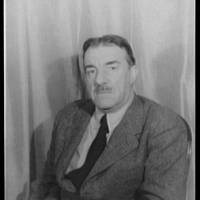
Portrait de Fernand Léger par Carl Van Vechten, 1936 - Domaine public via Library of Congress
Fernand Léger was born in Argentan, Normandy, on February 4, 1881, and died in Gif-sur-Yvette, outside Paris, on August 17, 1955. He took Cubism in a direction all his own, filling his canvases with machines, cities, workers and everyday objects painted in pure, flat color and heavy black outlines. American museums and artists embraced him early, and he spent the war years in New York. For collectors, his original color lithographs are the most accessible way into his work. But Léger is also one of the most reproduced modern masters, and the market is full of posthumous editions. Knowing the difference is what this guide is about.
Le Coin des Arts has several Léger prints on offer right now, picked for impression quality, edition, provenance and condition: the color lithograph Nature morte aux fruits (1948), another lithographed Nature morte (1951), Composition aux dominos (1947), colored by stencil (pochoir), the aquatint L’Oiseau rouge dans le bois (1953), the screenprint Chevreuse, and a woodcut, Le Campeur. Every listing tells you exactly what you’re buying: original print, signed print after a gouache, or posthumous edition.
Léger was the son of a cattle breeder. He trained with an architect in Argentan and Caen, then moved to Paris around 1900, where he worked as an architectural draftsman and took classes at the École des Arts décoratifs and the Académie Julian. He debuted at the Salon d’Automne in 1907. At La Ruche, the famous studio building in Montparnasse, he met Robert Delaunay, Marc Chagall and the poet Blaise Cendrars. By 1910–11 he was a Cubist, close to the Section d’Or group; critic Louis Vauxcelles called his style “Tubism.” In 1913 he showed at the Armory Show in New York, the exhibition that introduced European modernism to America, and signed with dealer Daniel-Henry Kahnweiler. MoMA owns one of his Contrast of Forms paintings from that year.
Drafted on August 2, 1914, he served at the front as a sapper and stretcher-bearer and sketched soldiers playing cards near Verdun in 1916. After being hospitalized and discharged in 1917, he signed with Léonce Rosenberg. The war turned him toward the machine. His “mechanical period” produced The City (1919) and, a few years later, the monumental Three Women (1921–22), now a highlight of the Museum of Modern Art. In 1921 he became friends with the American painter Gerald Murphy, and in 1924 he co-directed the experimental film Ballet mécanique with Dudley Murphy, with music by American composer George Antheil and camera work involving Man Ray. He also worked with Le Corbusier and Charlotte Perriand.
Gerald Murphy invited Léger on his first trip to the U.S. in 1931. In 1935 MoMA gave him a retrospective, and in 1938 he lectured at several American universities. When France fell in 1940, he sailed for New York and stayed until December 1945. He spent winters in the city and summers at Rouses Point, in upstate New York, taught at Mills College in California, and reconnected with Darius Milhaud and the artists of the Pierre Matisse Gallery. In America he painted his Divers and Cyclists series. MoMA owns Three Musicians, dated 1924–44: a composition first drawn in Paris and completed during his exile. After the war he received a commission for the United Nations building in New York. His impact on American art lasted: in 2008 the Fondation Beyeler in Switzerland built a Léger retrospective around his ties to the U.S., with input from Ellsworth Kelly and the Roy Lichtenstein Foundation.
Léger joined the French Communist Party in 1945 and wanted art that ordinary people could enjoy. He took on big public projects: the façade mosaic of the church at Assy, stained glass for the Sacré-Cœur church in Audincourt, and work for the university in Caracas. The Musée national d’art moderne in Paris held his retrospective in 1949. He painted The Constructors (1950) and La Grande Parade, and from about 1949 made ceramics at Biot on the Riviera. A lifelong teacher, he counted Louise Bourgeois and William Klein among his students. He died in 1955. In 1960 his widow Nadia Léger and his assistant Georges Bauquier opened the Musée national Fernand Léger in Biot.
Check the date first. Léger died in August 1955. La Ville (The City), a set of 29 lithographs he began in 1954, was finished by Nadia Léger, printer Fernand Mourlot and publisher Tériade and released in 1959 with a stamped signature, in an edition of 180. It’s a handsome set, but it’s posthumous. Many more lithographs and screenprints “after Léger” followed.
Look for a real signature. A pencil or ink signature by Léger is very different from one printed in the image or stamped on. Learn more about the signature.
Check the edition size. Signed editions typically range from 75 to 300 (see the printing process).
Get the Saphire number. A number with an “E” means a print made after his work. It’s genuine and signed, but it isn’t an original lithograph, and the price should reflect that.
Know your book plates. Pages from Cirque or Les Illuminations are true lithographs, but they aren’t pencil-signed.
Skip posters and offsets. Exhibition posters and offset reproductions aren’t original prints (what is an original print?).
Protect the color. Léger’s primaries fade in sunlight. Look for full margins and no foxing, and frame with UV-filtering glazing (framing). See our authenticity guarantee.
Léger’s first printed work illustrated Cendrars, including La Fin du monde filmée par l’ange N.-D. (1919), with stencil-colored images; MoMA holds a copy. Most of his prints, though, came after 1945, and nearly all are lithographs printed at the Mourlot studio in Paris. Highlights include the lithographs for Rimbaud’s Les Illuminations (Lausanne, 1949; the Hood Museum of Art at Dartmouth has a plate) and Cirque, published by Tériade in 1950: 83 lithographs, 34 in color, printed by Mourlot in an edition MoMA lists as 300. MoMA’s copy came with the Louis E. Stern Collection. Galerie Louise Leiris published his signed color lithographs, like Nature morte aux fruits (1948, edition of 75).
Léger also signed prints that skilled printers made from his gouaches: pochoirs published by Guy Spitzer (Composition aux dominos, 1947, edition of 300), aquatints from the Lacourière workshop (L’Oiseau rouge dans le bois, 1953, edition of 125), and screenprints (Chevreuse, after a drawing dated August 1951). The catalog raisonné was published in New York: Lawrence Saphire, Fernand Léger: The Complete Graphic Work (Blue Moon Press, 1978). Original prints get a plain number (“Saphire 18” is Nature morte aux fruits); prints after his works get an “E” number (“Saphire E19,” “Saphire E8”).
We only offer Léger prints whose status is clearly documented. Explore related artists: Pablo Picasso, Georges Braque, Alexander Calder, Le Corbusier and Roy Lichtenstein, or browse modern art and all our fine art prints and lithographs.
Lawrence Saphire, Fernand Léger: The Complete Graphic Work, Blue Moon Press, New York, 1978 · MoMA – Cirque, 1950 · MoMA – La Fin du monde, 1919 · MoMA – Contrast of Forms, 1913 · MoMA – Three Musicians, 1944 · Hood Museum of Art – Les Illuminations · Centre Pompidou – Fernand Léger · Musée national Fernand Léger, Biot

Secure payment
3DSecure 2.2

Free DHL Express delivery from €1,200
Carefully prepared parcel
Parcel tracking

Shipment insured
for the full value of the artwork, covering theft and damage

Fairest prices
Certificate of authenticity
Two galleries in Paris
Receive an email as soon as a new artwork is added for this artist
Your message has been sent ! We will get back to you as soon as possible.
Please fill in the form if you need further information such
Please fill in your email address, an email will be sent with a link to update your password.
You can now place orders and track your orders.
To save your wishlist, you can log in or create an account :
This is a 100% custom-made frame, carefully crafted by a professional framer. Finishes are available in light oak, white wood or black wood, with or without mat board and plexiglass. Delivery times may vary depending on the order, with an average lead time of 10 days.
This option will be offered during the cart step.



