
(1886-1966)

ARP Hans
Soleil recerclé, 1966
Wood engraving LCD5741
2 500.00€


ARP Hans
Symmetrical Shape with Flakes Arranged by Chance, 1955
Lithograph LCD7441
2 400.00€


ARP Hans
Documenta Geigy Das Unbehagen in der Kunst (Planche VII), 1965
Wood engraving LCD7032
2 400.00€
6


ARP Hans
Re-circled sun, 1966
Wood engraving LCD4090
2 400.00€


ARP Hans
Untitled
Wood engraving LCD4448
Sold

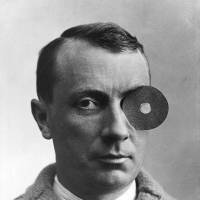
Unknown author, Public domain, via Wikimedia Commons
Few artists shaped modern art as broadly as Jean Arp, also called Hans Arp (1886-1966). A sculptor, painter, printmaker and poet, he co-founded Dada in Zurich, exhibited with the Surrealists and became a leading figure of abstract art. His smooth, biomorphic shapes – inspired by chance and by the natural world – left a lasting mark on twentieth-century sculpture, and American museums were among the first to champion them. Born in Alsace, he went by “Hans” in German and “Jean” in French, a two-sided name that fits an artist who always worked across two cultures.
At our Paris gallery, Le Coin des Arts, you will find a curated selection of original Jean Arp artwork on paper – mainly lithographs and woodcuts – chosen for print quality, documented provenance and condition. We ship worldwide by insured DHL Express, with free shipping on orders from €1,200.
Hans Arp was born on September 16, 1886, in Strasbourg, then part of Germany. He studied at the Strasbourg school of decorative arts, at the art school in Weimar and at the Académie Julian in Paris, where he quickly tired of academic training. After his family relocated to Weggis, Switzerland, he co-founded the Moderner Bund in 1911, got to know Paul Klee and, in 1912, exhibited with the Blue Rider (Blaue Reiter) group in Munich alongside Kandinsky. In 1912 he also made his first print, an Expressionist self-portrait woodcut.
Arp spent World War I in Zurich, where in 1916 he joined Hugo Ball, Tristan Tzara, Marcel Janco and Richard Huelsenbeck at the Cabaret Voltaire – the birthplace of Dada. It was there that he made his first collages “according to the laws of chance,” his painted wood reliefs, and dozens of woodcuts for Dada magazines and publications, including illustrations for Tzara’s Vingt-cinq poèmes (1918).
Also in Zurich, he met the artist Sophie Taeuber; they married in 1922 and often created works together. In 1919-1920 he led Cologne Dada with Max Ernst, and in 1925 he took part in the very first Surrealist show, at the Galerie Pierre in Paris.
From 1926 to 1928, Arp, Sophie Taeuber and Theo van Doesburg remodeled the interior of the Aubette in Strasbourg, a manifesto of abstract design. The couple then moved to Clamart, outside Paris, into a home and studio designed by Sophie Taeuber. Arp joined the groups Cercle et Carré and Abstraction-Création, the latter founded in 1931 with Auguste Herbin among others.
Starting in 1930 he made his “torn papers” and began carving and modeling sculpture in the round, in plaster, marble and later bronze. His Human Concretions – sleek forms that hover between body, plant and stone – established him as one of the century’s most influential sculptors. In 1936 his work appeared in two landmark shows at The Museum of Modern Art in New York, Cubism and Abstract Art and Fantastic Art, Dada, Surrealism. Arp is also the one who named his friend Alexander Calder’s non-moving sculptures “stabiles.”
During World War II he took refuge in Grasse with Sophie Taeuber, Alberto Magnelli and Sonia Delaunay, then in Switzerland. Sophie Taeuber died in an accident in Zurich on January 13, 1943, and Arp, devastated, did not fully return to work until he was back in Meudon in 1946.
The United States played a key role in Arp’s postwar reputation. Peggy Guggenheim – whose very first purchase for her collection was an Arp bronze – showed his work at her New York gallery, Art of This Century, in 1944. In 1949 Arp traveled to New York for an exhibition at Curt Valentin’s Buchholz Gallery, and he created the Constellation relief for the Harvard Graduate Center, designed by Walter Gropius and The Architects Collaborative in Cambridge, Massachusetts. MoMA gave him a retrospective from October 8 to November 30, 1958, followed by the Musée National d’Art Moderne in Paris in 1962.
Other milestones include the International Grand Prize for Sculpture at the 1954 Venice Biennale, the UNESCO relief in Paris (1958), the Légion d’honneur (1960), the Grand Prix National des Arts (1963) and the Carnegie Prize in Pittsburgh (1964). After marrying Marguerite Hagenbach in 1959, he split his time between Meudon and Locarno, Switzerland, and died in Basel on June 7, 1966. Today the Fondation Arp occupies his former home and studio in Clamart, and the Arp Museum Bahnhof Rolandseck in Germany is dedicated to Arp and Sophie Taeuber-Arp.
Arp made prints throughout his career, from 1912 to the end of his life. For him a print was never a copy: it extended his collages and reliefs, carrying the same cut-out, floating, balanced shapes onto the woodblock and the litho stone.
The woodcut came first: in the Dada era, his bold black-and-white blocks illustrated magazines and poetry books. He kept coming back to it – in 1952 Curt Valentin published his Dreams and Projects, combining text and woodcuts – and printmaker Karl Schmid cut several of his designs in color. After 1945, lithography gave him solid fields of bright color – black, blue, red, ocher – where his organic shapes appear to float. He also explored intaglio printing, and engraver Jean Signovert translated several of his collages into etchings and engravings.
The standard reference is Wilhelm F. Arntz’s catalogue raisonné, Hans (Jean) Arp. Das graphische Werk 1912-1966 (1980). It documents 426 prints and distinguishes Arp’s original prints from reproductions made after his works. Dealers and auction houses cite each print by its “Arntz number” – the first detail to confirm before you buy.
A poet himself, Arp illustrated many artist’s books, both his own and those of friends like Tristan Tzara, Richard Huelsenbeck and Benjamin Péret. Collectors especially look for Le Siège de l’air (1946), with drawings made jointly with Sophie Taeuber, Le Voilier dans la forêt (Louis Broder, 1957) and Soleil recerclé (1966), with woodcuts.
As a pioneer of Dada, Surrealism and abstraction, Arp is a cornerstone of modern art, and his influence on sculptors and painters is hard to overstate. His fine art prints are far more accessible than his sculptures, making them an ideal way to own an original artwork by one of the founders of modernism.
Before buying a Jean Arp lithograph or woodcut, check the technique, the edition size and how the print is annotated (numbered, artist’s proof or “hors commerce”), whether it is hand-signed in pencil, its Arntz number, whether it is an original print or a reproduction, whether it was issued in a book or portfolio, and its provenance and condition. Arp’s large flat color areas and wide white margins reveal even small stains, so paper condition matters a great deal.
Original print vs. reproduction: Arp’s imagery has been reproduced extensively. An original print is an etching, woodcut or lithograph designed by the artist to be printed in a limited edition, usually hand-signed and numbered on fine paper, and listed in the catalogue raisonné. A plate from an illustrated book may be original even without a signature – the book’s colophon is what confirms it.
Le Coin des Arts carefully vets every original Jean Arp print for authenticity, provenance and condition, and helps collectors choose their artwork, plan custom framing and care for it. Explore more works by artists from Arp’s circle at the gallery, such as Max Ernst, Man Ray, Joan Miró and Sonia Delaunay.
Fondation Arp, Clamart · Arp Museum Bahnhof Rolandseck, Remagen · MoMA, Jean Arp: A Retrospective (1958) · Harvard Art Museums, Hans Arp’s Constellations II · Wilhelm F. Arntz, Hans (Jean) Arp. Das graphische Werk 1912-1966, Gertrud Arntz-Winter, 1980 · Eduard Trier, Hans Arp. Skulpturen 1957-1966, Gerd Hatje, 1968.

Secure payment
3DSecure 2.2

Free DHL Express delivery from €1,200
Carefully prepared parcel
Parcel tracking

Shipment insured
for the full value of the artwork, covering theft and damage

Fairest prices
Certificate of authenticity
Two galleries in Paris
Receive an email as soon as a new artwork is added for this artist
Your message has been sent ! We will get back to you as soon as possible.
Please fill in the form if you need further information such
Please fill in your email address, an email will be sent with a link to update your password.
You can now place orders and track your orders.
To save your wishlist, you can log in or create an account :
This is a 100% custom-made frame, carefully crafted by a professional framer. Finishes are available in light oak, white wood or black wood, with or without mat board and plexiglass. Delivery times may vary depending on the order, with an average lead time of 10 days.
This option will be offered during the cart step.
