
(1889-1963)
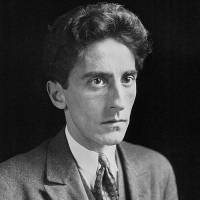
Jean Cocteau, 1923 – Agence Meurisse / BnF – Domaine public
Jean Cocteau (July 5, 1889, Maisons-Laffitte, France – October 11, 1963, Milly-la-Forêt) is best known as the poet behind Les Enfants terribles and the director of Beauty and the Beast and Orpheus. But he never stopped drawing, and that line is what collectors chase today: original color lithographs printed by Mourlot in Paris, illustrated books, early posters for the Ballets Russes, ceramics and tapestries. American museums, from the Museum of Modern Art in New York to the Fine Arts Museums of San Francisco, hold his work, and one of the great Cocteau collections was assembled by an American, Severin Wunderman.
Le Coin des Arts follows Cocteau’s work and offers his original lithographs and illustrated books when they come up, selected for print quality, edition, provenance and condition. Want to know when one arrives? Click "follow the artist" on this page and we’ll let you know.
Cocteau was kicked out of the Lycée Condorcet in 1904 and launched as a poet in April 1908 at a reading organized by the actor Édouard de Max at the Théâtre Femina. In 1911 he designed lithographic posters for Serge Diaghilev’s Ballets Russes, one of them showing Vaslav Nijinsky in Le Spectre de la rose. MoMA owns an impression of that 1911 lithograph, a gift of the writer and photographer Carl Van Vechten. Cocteau recycled the images in 1913 for the poster of the Ballets Russes season at the Théâtre des Champs-Élysées, the season of The Rite of Spring.
On May 18, 1917, at the Théâtre du Châtelet in Paris, the Ballets Russes premiered Parade, with Cocteau’s scenario, Erik Satie’s score, Léonide Massine’s choreography and a curtain, sets and costumes by Pablo Picasso. Two years later came Le Potomak (1919), a book of prose and drawings. In 1923 the Paris publisher Stock released Dessins, an album of quick line portraits and caricatures; Dover later reissued 129 of those drawings for English-language readers. Among the Americans he drew in Paris were the writer Glenway Wescott (1926) and Monroe Wheeler (1927); both ink portraits are now at MoMA, gifts of Wheeler. The decade closed with the play Orphée (1926) and the novel Les Enfants terribles (1929).
Cocteau shot The Blood of a Poet in 1930, then Beauty and the Beast (1946) and Orpheus (1950). In 1948 the Paris publisher Paul Morihien issued Drôle de ménage, 29 color lithographs plus a lithographed cover, printed by Union et Mourlot frères in an edition of 2,720, of which 720 on Rives paper; a copy is in the Fine Arts Museums of San Francisco. At the very end of 1948 he flew to New York for about three weeks. The trip produced Lettre aux Américains (Grasset, 1949), published in English decades later by New Directions as Letter to the Americans.
From the spring of 1950 Cocteau was a regular guest of Francine Weisweiller at the Villa Santo Sospir on Cap Ferrat, whose walls he painted. Murals followed for the Chapel of Saint-Pierre in Villefranche-sur-Mer (1956-57), the wedding hall of Menton’s city hall (1957-58) and the Chapel of Saint-Blaise-des-Simples in Milly-la-Forêt, where he is buried. He was received into the Académie française on October 20, 1955, and Oxford gave him an honorary doctorate in June 1956. Starting in 1957 he designed more than 300 ceramics with the Madeline-Jolly pottery in Villefranche, and in 1962 the fifteen stained-glass windows of Saint-Maximin in Metz. He died at Milly on October 11, 1963.
The American businessman Severin Wunderman, owner of the Swiss watch brand Corum, started buying Cocteau at the age of 19 and opened his own Cocteau museum in Irvine, California, in 1985. His collection grew beyond 2,000 works, and he argued that Cocteau’s graphic and pictorial work was still undervalued. In 2005 he formalized a gift of 1,809 works, 990 of them by Cocteau, to the city of Menton on the French Riviera, where the Musée Jean Cocteau – Collection Séverin Wunderman, designed by Rudy Ricciotti, opened in 2011. U.S. scholarship remains central: the 2024 retrospective Jean Cocteau. The Juggler’s Revenge at the Peggy Guggenheim Collection in Venice, with more than 150 works including prints, jewelry and tapestries, was curated by Kenneth E. Silver of New York University, with loans from, among others, the Phoenix Art Museum.
Cocteau’s printmaking medium of choice was lithography, which keeps the energy of a pen or crayon line. He worked with Mourlot, the Paris print shop of Matisse, Chagall and Picasso. The headline title is Théâtre (Grasset, 1957): two volumes with 40 original color lithographs on vergé de Voiron paper, one per play or libretto, from Les Mariés de la tour Eiffel to Orphée. Rutgers’ Zimmerli Art Museum holds the set Lithographies originales de Jean Cocteau, dated 1951-1957. Watch out for Picasso de 1916 à 1961 (Monaco, 1962): Cocteau wrote the text, but its 24 lithographs are by Picasso. As far as we know, there is no published catalog raisonné of Cocteau’s prints, so you won’t find a standard reference number; a print is identified by title, date, publisher, printer and edition size (see the printing process).
Hand-signed or plate-signed? Many Cocteau lithographs show his signature and star printed in the stone. That is not a hand signature, and it should not be priced like one.
Fakes are real. The Morgan Library & Museum in New York catalogs a "Cocteau" drawing as a forgery; Cocteau specialist Annie Guédras logged it as number 1371 in her archive of fakes. Treat any pencil signature with care and ask for documentation.
Posthumous editions. Lithographs and screenprints were published from his drawings after 1963. They are not signed by Cocteau and sell for far less than lifetime impressions.
Edition and paper. For illustrated books, the justification page tells you how many copies were printed and on which paper: in Drôle de ménage, the 720 copies on Rives are the ones to look for. For separate prints, check the number in pencil against the edition announced by the publisher.
Book plates. Sheets from Théâtre or Drôle de ménage often turn up framed as single prints. They are original lithographs, but unsigned and printed for the book.
Condition and provenance. Check for sun-fading, foxing and trimmed margins, and favor a documented history of ownership. Learn about our guarantees on the authenticity page, and about custom framing.
Le Coin des Arts also offers fine art prints by Pablo Picasso, Henri Matisse, Marc Chagall, Man Ray and Léonard Foujita. Explore modern art, illustrated books, posters and engravings and lithographs.
Jean Cocteau, Letter to the Americans, New Directions · Jean Cocteau, Drawings: 129 Drawings from "Dessins", Dover · Jean Cocteau. The Juggler’s Revenge, ed. Kenneth E. Silver, Peggy Guggenheim Collection / Marsilio Arte, 2024 · MoMA – Jean Cocteau · Fine Arts Museums of San Francisco – Drôle de ménage · Zimmerli Art Museum – Lithographies originales · The Morgan Library & Museum – Forgery after Cocteau · Menton – Jean Cocteau collections · Académie française – Reception speech

Secure payment
3DSecure 2.2

Free DHL Express delivery from €1,200
Carefully prepared parcel
Parcel tracking

Shipment insured
for the full value of the artwork, covering theft and damage

Fairest prices
Certificate of authenticity
Two galleries in Paris
Receive an email as soon as a new artwork is added for this artist
Your message has been sent ! We will get back to you as soon as possible.
Please fill in the form if you need further information such
Please fill in your email address, an email will be sent with a link to update your password.
You can now place orders and track your orders.
To save your wishlist, you can log in or create an account :
This is a 100% custom-made frame, carefully crafted by a professional framer. Finishes are available in light oak, white wood or black wood, with or without mat board and plexiglass. Delivery times may vary depending on the order, with an average lead time of 10 days.
This option will be offered during the cart step.



