
(1928-2005)
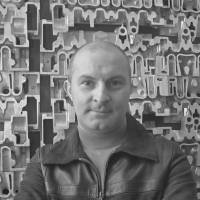
Jack de Nijs for Anefo, CC0, via Wikimedia Commons
Arman, born Armand Pierre Fernandez in Nice, France, on November 17, 1928, died in New York City on October 22, 2005. A founding member of the Nouveaux Réalistes (New Realists), he spent more than forty years between the French Riviera and Lower Manhattan and became a U.S. citizen. His raw material was the mass-produced object: he piled it up in Plexiglas boxes (Accumulations), filled cases with trash (Poubelles), smashed it (Colères), sliced it (Coupes) and burned it (Combustions). He also left a large body of fine art prints – screenprints, lithographs, etchings and multiples – documented in a catalog raisonné.
Le Coin des Arts follows Arman's work and offers his original prints whenever good impressions come our way, chosen like everything we sell for printing quality, edition, provenance and condition. Want to know when a new piece arrives? Just click "follow the artist" on this page.
His father, Antonio Fernandez, an antiques dealer and amateur painter, taught him oil painting and photography. After high school in 1946, Armand studied at the École nationale des arts décoratifs in Nice. In 1947, at a judo class at the Nice police school, he met Yves Klein and the poet Claude Pascal. He went on to the École du Louvre in Paris in 1949, taught judo in Madrid in 1951 and served as a medic in the French army during the Indochina War. In 1954, after seeing a Kurt Schwitters show, he began his Cachets, works made by inking rubber stamps over and over on paper or canvas – printmaking by other means. Around 1958 a typo on an invitation card for the Iris Clert gallery dropped the "d" from his first name, and he kept the new spelling: Arman.
Next came the Allures, marks left by inked objects dragged or thrown across a surface, then the first Poubelles and Accumulations in 1959. On October 25, 1960, he answered Klein's Le Vide ("The Void," 1958) by packing the Iris Clert gallery with garbage: Le Plein ("Full Up"). Two days later, on October 27, 1960, he signed the founding declaration of Nouveau Réalisme with Raymond Hains, Martial Raysse, Daniel Spoerri, Jean Tinguely, Jacques Villeglé and the critic Pierre Restany. That fall in Paris he met Larry Rivers, Robert Rauschenberg and Jasper Johns, and took English lessons from Rauschenberg. On July 13, 1961, at a New Realist festival near Nice, he smashed furniture in public: his first Colère.
Arman arrived in New York in October 1961. The Museum of Modern Art put him in The Art of Assemblage, and the Cordier-Warren Gallery gave him his first U.S. solo show. He checked into the Chelsea Hotel – he would come back every year until 1968 – and met Marcel Duchamp at a dinner given by William Copley. In 1962 the Sidney Janis Gallery included him in The New Realists, the show that set European New Realism next to American Pop, and the Dwan Gallery in Los Angeles gave him a solo show; Janis followed with his first solo show there in 1963. In 1964 the Walker Art Center in Minneapolis was among his first museum shows. He taught painting at UCLA for two semesters in 1967, bought a house on Church Street in 1969 and moved to a SoHo loft in 1970. He married Corice Canton on July 13, 1971, and became an American citizen in the early 1970s, taking the legal name Armand Pierre Arman. In 1974 the La Jolla Museum of Contemporary Art opened Selected Works 1958-1974, which toured the country and ended at the Albright-Knox in Buffalo.
In 1982 he completed Long Term Parking outside Paris, in Jouy-en-Josas: about sixty cars locked in 1,600 tons of concrete, commissioned by the Fondation Cartier. In 1985 two bronze towers, L'Heure de tous (clocks) and Consigne à vie (suitcases), went up at Paris's Gare Saint-Lazare, and his Rostropovich's Tower was shown outside Lincoln Center. That same year he moved his New York base from SoHo to TriBeCa. American museums kept showing him, from the Ulrich Museum of Art at Wichita State University in Kansas (1977) to the Center for the Fine Arts in Miami (Tools and Instruments, 1984). Arman 1955-1991: A Retrospective opened at the Museum of Fine Arts, Houston in 1991 and traveled to the Brooklyn Museum and the Detroit Institute of Arts in 1992. In Paris, the Jeu de Paume gave him his first museum retrospective in 1998. After his death in Manhattan in 2005, the Centre Pompidou mounted a 120-work retrospective (September 22, 2010-January 10, 2011), shown next at the Museum Tinguely in Basel.
For an artist who started with rubber stamps, prints came naturally. A good American example is Boom-Boom (1966), a screenprint of pistols with pencil additions from the New York International portfolio, published by Tanglewood Press and printed by Chiron Press in New York in an edition of 225; MoMA owns an impression, and the Detroit Institute of Arts holds the print as well. In 2012 MoMA's print department also acquired two 1965 multiples of cut shoes, published in an edition of 100 by Daniel Spoerri's Edition MAT. With John Gibson in New York, Arman co-published Accumulation (1973), a stamped print boxed with its own rubber stamps. Later themes – paint tubes, brushes, sliced violins – appear in lithographs, embossed screenprints and etchings and aquatints; Avanti Galleries in New York showed his Monumental Aquatints 1989-1993 in 1995.
The standard reference is Jane Otmezguine and Marc Moreau, Arman: Estampes, catalogue raisonné 1960-1990 (Paris, Marval, 1990, French and English), with 284 entries; MoMA's collection lists two untitled prints issued with it. "Otmezguine/Moreau 248," for instance, is Le Traité du violon (1979), 12 drypoints and 12 lithographs in an edition of 75. Prints made after 1990 are not in the book.
Match the catalog number. For 1960-1990 prints, the Otmezguine/Moreau number should agree with the title, medium, size and edition.
Read the edition. Editions run from under 100 (90 plus 8 artist's proofs for a 1976 etching) to 225 for Boom-Boom and 500 for some later screenprints. More on the printing process.
Check the signature. Arman usually signed his prints in pencil. A signature printed in the plate is not a hand signature, and sheets signed by several artists can carry signatures no one will guarantee.
Know what an offset is. A few signed, numbered offsets are listed in the catalog and should be sold as offsets. Unsigned exhibition posters are reproductions.
Unique work or print? A Cachet, Allure or Colère on paper is a one-off, not a print, and should be backed by the Arman Studio archives in New York or the Denyse Durand-Ruel archives. See our authenticity guarantee.
Mind the relief. Embossed and collaged sheets crush easily. Ask for full margins and no fading, and frame with spacers; see our framing options.
Pair Arman with other artists from his circle: Yves Klein, Jean Tinguely, Niki de Saint Phalle, César, plus Roy Lichtenstein from the American Pop side. Browse New Realism or all our fine art prints and lithographs.
Jane Otmezguine and Marc Moreau, Arman: Estampes, catalogue raisonné 1960-1990, Paris, Marval, 1990 · MoMA – Boom-Boom from New York International · MoMA – Division and Multiplication: Arman's Multiples · Fondation A.R.M.A.N. – Chronology · Centre Pompidou – Arman retrospective, 2010 · Schellmann Art – Arman editions

Secure payment
3DSecure 2.2

Free DHL Express delivery from €1,200
Carefully prepared parcel
Parcel tracking

Shipment insured
for the full value of the artwork, covering theft and damage

Fairest prices
Certificate of authenticity
Two galleries in Paris
Receive an email as soon as a new artwork is added for this artist
Your message has been sent ! We will get back to you as soon as possible.
Please fill in the form if you need further information such
Please fill in your email address, an email will be sent with a link to update your password.
You can now place orders and track your orders.
To save your wishlist, you can log in or create an account :
This is a 100% custom-made frame, carefully crafted by a professional framer. Finishes are available in light oak, white wood or black wood, with or without mat board and plexiglass. Delivery times may vary depending on the order, with an average lead time of 10 days.
This option will be offered during the cart step.



