
(1889-1976)

CHAUVIN Jean-Gabriel
Untitled
Charcoal (modern) LCD7914
1 300.00€

CHAUVIN Jean-Gabriel
Untitled, 1920
Drawing (modern) LCD5893
1 100.00€

CHAUVIN Jean-Gabriel
Untitled, 1920
Drawing (modern) LCD5897
1 100.00€

CHAUVIN Jean-Gabriel
Untitled, 1920
Drawing (modern) LCD5895
1 100.00€

CHAUVIN Jean-Gabriel
Untitled, 1920
Drawing (modern) LCD5894
1 100.00€

CHAUVIN Jean-Gabriel
Untitled, 1920
Drawing (modern) LCD5892
1 100.00€

CHAUVIN Jean-Gabriel
Untitled, 1920
Drawing (modern) LCD5891
1 100.00€

CHAUVIN Jean-Gabriel
Untitled, 1920
Drawing (modern) LCD4429
900.00€

CHAUVIN Jean-Gabriel
Untitled, 1930
Drawing (modern) LCD4087
1 300.00€

CHAUVIN Jean-Gabriel
Untitled, 1920
Drawing (modern) LCD4084
1 100.00€

CHAUVIN Jean-Gabriel
Untitled, 1920
Drawing (modern) LCD3579
1 100.00€

CHAUVIN Jean-Gabriel
Untitled
Charcoal (modern) LCD7972
1 300.00€

CHAUVIN Jean-Gabriel
Untitled
Charcoal (modern) LCD7240
1 300.00€

CHAUVIN Jean-Gabriel
Untitled
Charcoal (modern) LCD7410
1 300.00€

CHAUVIN Jean-Gabriel
Untitled
Charcoal (modern) LCD7236
1 300.00€

CHAUVIN Jean-Gabriel
Untitled
Charcoal (modern) LCD7235
1 300.00€

CHAUVIN Jean-Gabriel
Sirène, 2000
Sculpture LCD6702
22 000.00€
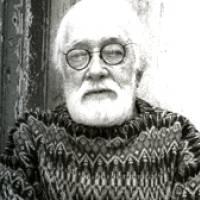
Who was Jean Chauvin? Born Jean-Gabriel Chauvin in 1889, this French artist is one of the true trailblazers of abstract sculpture. Over six decades, far from art-world trends, he carved smooth, organic, symbol-laden forms that put him in the same league as Constantin Brancusi and Jean Arp. He was a master of direct carving in exotic woods – and a powerful draftsman, too. American museumgoers can see his work at the Smithsonian’s Hirshhorn Museum and Sculpture Garden in Washington, D.C.
Galerie Le Coin des Arts, in Paris, offers original artwork by Jean Chauvin – mostly drawings in charcoal, plus a selection of sculpture – hand-picked for quality, provenance and condition.
Want to explore his complete body of work, archival documents and a detailed timeline? Visit the official website of the Archives Jean-Gabriel Chauvin (jeanchauvin.com), published by the Comité Jean Chauvin.
Jean-Gabriel Chauvin was born on March 30, 1889, in Rochefort-sur-Mer, a port town in western France. His twin brother died just days after birth – a loss that echoes through his art in recurring themes of birth, doubling and twins. At 17, in 1906, he used a knife to carve his first sculpture out of birch wood, keeping it hidden from a father who was against his becoming an artist.
After his father died, Chauvin headed to Paris in 1908. He studied at the École des Arts Décoratifs, then joined sculptor Antonin Mercié’s studio at the École des Beaux-Arts in 1909, staying until 1915; there he became close friends with François Pompon. In 1909 he also completed La Toilette, a Japanese ebony piece considered one of the first abstract sculptures made in France.
From 1913 to 1920, Chauvin exhibited at the Salon d’Automne (he was later elected a member) and the Salon des Indépendants while working in the studio of Joseph Bernard, where he helped carve the Frise de la Danse, now at the Musée d’Orsay. His method was direct carving: he worked the ebony or hardwood block himself, without a model to copy mechanically, and brought out the beauty of the wood with painstaking polishing. Some of these sleek shapes – seeds, flames, birds, figures – were later cast in bronze.
His first solo show took place in June 1928 at the Paris gallery Au Sacre du Printemps, later renamed for Jeanne Bucher, who backed his work until she died in 1947. Fashion designer and collector Jacques Doucet bought one of his wood carvings for his studio in Neuilly, and the architect Le Corbusier purchased one of his first bronzes. In the 1930s, Chauvin moved to Malakoff, just outside Paris, and bought a house at Port-des-Barques on the Atlantic coast.
In 1935, Chauvin created a Fontaine lumineuse (Luminous Fountain) for the celebrated French ocean liner Normandie, which sailed the Le Havre–New York route. For the 1937 Paris International Exposition he designed Sculpture-Signal, a concrete landmark 11 meters (about 36 feet) tall, along with two large porcelain bowls for the Sèvres pavilion. The French government bought Le Tombeau d’Ève in 1939 – his first piece to enter a public collection – followed by Puissant et solitaire (1939) and Incantation maternelle (1947).
On March 24, 1949, Galerie Maeght showcased 41 of his sculptures and drawings, with a special issue of Derrière le miroir (no. 18) featuring essays by Robert Rey, Stanislas Fumet and Georges Hugnet. From 1947 to 1955, with the support of Musée Rodin curator Cécile Goldscheider, his work traveled to Bern, Prague, Amsterdam, Stockholm and Düsseldorf, and in 1954 it was shown in Switzerland next to Brancusi, Arp, Pevsner, González and Laurens.
In 1960, art dealer Alex Maguy organized a solo show at the Galerie de l’Élysée in Paris, and Christian Zervos published a book on him with Cahiers d’Art. Then, in 1962, Chauvin was chosen to represent France at the 31st Venice Biennale, where curator Jacques Lassaigne presented 34 of his sculptures alongside paintings by Alfred Manessier and Serge Poliakoff.
Two of Chauvin’s wood sculptures belong to the Hirshhorn Museum and Sculpture Garden (Smithsonian Institution) in Washington, D.C.: Georgette (1928) and An Island of the Night (Une île de la nuit, 1932). Both were shown at the Galerie de l’Élysée in 1960, acquired by the New York collector Joseph H. Hirshhorn in 1961 and donated by him in 1966. An Island of the Night appeared in the museum’s inaugural exhibition (1974–1975), and Georgette in “Direct Carving in Modern Sculpture” (1983).
Chauvin died on May 15, 1976, at the Château de Chaillé in Saint-Martin-lès-Melle, and 162 of his small models were donated to the Musée national d’Art moderne. Beyond Washington, his work can be found at the Centre Pompidou, the Musée d’Art Moderne de Paris (Narcisse, 1939), the Fondation de Coubertin (Sirène, 1937) and the Tel Aviv Museum of Art.
The Comité Jean Chauvin preserves the artist’s archives; it published the catalog raisonné of his sculpture (Chauvin sculpteur, 2007) and is now working on catalogs of his drawings and photographs. Read his full biography and browse his artwork on the Archives Jean-Gabriel Chauvin website.
Chauvin never stopped drawing. His charcoal drawings and pencil works are much more than sketches for sculpture: they are finished artworks that explore the same budding forms and tension-filled volumes, using rich blacks and soft, blended shading. For collectors, they are a more personal – and more accessible – entry point into the work of a major abstract sculptor.
When you evaluate an artwork by Jean Chauvin, check the medium (charcoal, pencil or ink; carved wood, plaster or bronze), whether it is hand-signed or stamped, the date, the provenance, the exhibition history and the condition. For bronzes, the foundry, the edition number and the casting date are key – and a well-documented ownership history, like that of the Hirshhorn pieces, adds real value. His sculpture is listed in the 2007 catalog raisonné, and the Comité Jean Chauvin is in charge of authentication.
Galerie Le Coin des Arts carefully vets every Chauvin artwork for authenticity, provenance and condition, and helps collectors choose a piece, its framing and the right conservation. The gallery ships worldwide by insured DHL Express, free of charge for orders of €1,200 or more. You’ll also find works by other leading sculptors and painters of his era, including Jean Arp, Ossip Zadkine, Alfred Manessier and Serge Poliakoff.
Archives Jean-Gabriel Chauvin – Comité Jean Chauvin (jeanchauvin.com) · Chauvin sculpteur, catalog raisonné of the sculpture, 2007 · Derrière le miroir no. 18, Galerie Maeght, 1949 · Christian Zervos, Chauvin, Cahiers d’Art, 1960 · Smithsonian Institution, Hirshhorn Museum – Georgette, 1928.

Secure payment
3DSecure 2.2

Free DHL Express delivery from €1,200
Carefully prepared parcel
Parcel tracking

Shipment insured
for the full value of the artwork, covering theft and damage

Fairest prices
Certificate of authenticity
Two galleries in Paris
Receive an email as soon as a new artwork is added for this artist
Your message has been sent ! We will get back to you as soon as possible.
Please fill in the form if you need further information such
Please fill in your email address, an email will be sent with a link to update your password.
You can now place orders and track your orders.
To save your wishlist, you can log in or create an account :
This is a 100% custom-made frame, carefully crafted by a professional framer. Finishes are available in light oak, white wood or black wood, with or without mat board and plexiglass. Delivery times may vary depending on the order, with an average lead time of 10 days.
This option will be offered during the cart step.



