
(1911-1977)

GILIOLI Emile
La Boisseloune, 1955
Sculpture LCD6512


GILIOLI Emile
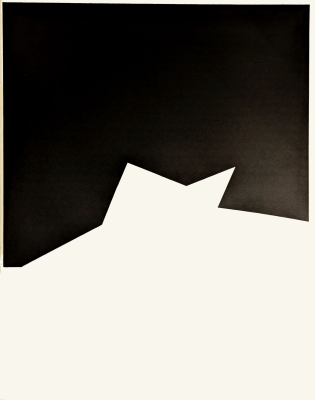
Composition Aile noire
Lithograph LCD6923
550.00€


GILIOLI Emile
Cubist interior, 1941
Pastel (modern) LCD5558
4 000.00€

GILIOLI Emile
Composition, 1962
Lithograph LCD3761
650.00€
Émile Gilioli (born June 10, 1911, in Paris; died in Paris in 1977) was one of the defining sculptors of postwar French abstraction. His polished bronzes and carved stones – egg shapes, pebbles, wings, suns – sit in the Museum of Modern Art in New York, the Carnegie in Pittsburgh, the Tate and the Centre Pompidou. In France he is best known for the National Monument to the Resistance on the Plateau des Glières in the Alps, dedicated by André Malraux in 1973. Less familiar, and well worth a look for collectors, are his pastels, gouaches, collages and original lithographs, which translate the same pure forms into black, white and color on paper.
At Le Coin des Arts you’ll currently find a sculpture, La Boisseloune (1955), carved in painted and engraved stone and catalogued by Jianou and Lassalle; a one-of-a-kind pastel, Intérieur cubiste (1941), from his years in Grenoble; and two signed lithographs, Composition Aile noire and Composition (1962). We picked each one for quality, edition or uniqueness, provenance and condition.
Gilioli grew up in a family of Italian shoemakers living by the Canal Saint-Martin in Paris. As a child he spent time in Italy and learned blacksmithing, hands-on training that shaped his respect for materials. After World War I the family moved to Nice. There he studied at the École des Arts Décoratifs and, starting in 1928, worked for a sculptor who made ornament for gardens and building façades. A scholarship brought him to the École des Beaux-Arts in Paris in 1931. He also drew at the Grande Chaumière and the Académie Ranson and moved to Montparnasse in 1935. In 1939 he showed for the first time at the Salon des Tuileries, still working figuratively.
Drafted in 1939, Gilioli was stationed in Grenoble, where he stayed until the Liberation. The turning point was meeting Andry-Farcy, curator of the city’s museum, who opened his eyes to Cubism; at the museum he also saw the original plaster of Raymond Duchamp-Villon’s Horse. The 1941 pastel Intérieur cubiste captures that shift. In 1945 the Galerie Laforge in Grenoble gave him his first solo show. Commissions for Resistance memorials followed in the Isère and the Vercors: Voreppe (1946), the monument to Grenoble’s deportees (1950), La Chapelle-en-Vercors (1951) and the recumbent figure at Vassieux-en-Vercors (1952). From then on he split his time between Paris and Saint-Martin-de-la-Cluze, a village south of Grenoble.
Back in Paris, Gilioli broke with academic sculpture. In 1946 he joined the abstract painters around Galerie Denise René, among them Victor Vasarely, Jean Deyrolle, Jean Dewasne and Serge Poliakoff, and began exhibiting there in 1947, the same year he spent time in Brancusi’s studio. A 1948 group show at the gallery put him next to Alexander Calder, Hans Arp, Picasso, Henri Laurens, Giacometti and Robert Jacobsen. He exhibited at the Salon des Réalités Nouvelles and the Salon de Mai, helped found the Salon de la Jeune Sculpture in 1949 (63 sculptors in the garden of the Musée Rodin), and became vice president of the Espace group led by André Bloc, alongside Fernand Léger and Le Corbusier – a movement devoted to bringing art and architecture together. In 1951 the French government bought his polished bronze La Sphère (1947) for the national museum of modern art. La Boisseloune (1955) dates from these productive years; the form was also cast in bronze in 1959.
Gilioli is well represented in American museums. The Museum of Modern Art in New York holds his work, and his Soleil de vie (1968) belongs to the Carnegie Institute in Pittsburgh. Galerie Dina Vierny, his Paris dealer from 1962, also lists the Art Institute of Chicago, the Seattle Art Museum, the Milwaukee Art Center and a Miami museum of modern art among the institutions that own his sculpture.
Gilioli moved into a studio in Paris’s Vaugirard neighborhood in 1956. The 1960s were the decade of his large polished bronzes, such as Astrale (1966), which the Centre Pompidou bought in 1980, and of public commissions like the fountain for Grenoble’s city hall (1968). The Musée Galliera organized a retrospective in 1968, and that year he published his thoughts on his art in La Sculpture. He designed many tapestry cartoons, some woven in Aubusson. His biggest project was the National Monument to the Resistance on the Plateau des Glières in Haute-Savoie, dedicated by André Malraux on September 2, 1973: a V-shaped structure about 50 feet tall, with a solar disk at its center. He died in Paris in 1977. The Centre Pompidou showed his sculpture in 1979 and the Musée Maillol staged a retrospective in 1997. That same year the village of Saint-Martin-de-la-Cluze bought his house and studio, as his widow Babet wished; the Atelier Gilioli museum opened in 2004. Galerie Dina Vierny devoted a new exhibition to him in Paris in 2022.
Gilioli drew constantly in pastel, charcoal and gouache and made cut-paper collages. His lithographs, mostly from the 1960s and 1970s, use bold flat shapes and strong contrasts. Most are hand-signed in pencil and numbered in small editions (runs of 50, 75 and 80 show up on the market); some artist’s proofs are numbered in Roman numerals. He also made etchings: Labyrinthe appeared in the 1962 portfolio Paroles peintes I, published in Paris by Odette Lazar-Vernet, and is unsigned as issued. You will also see screenprints hand-colored with gouache. As far as we know, there is no catalogue raisonné of Gilioli’s prints. The main reference book, by Ionel Jianou and Hélène Lassalle (Arted, Paris, 1971), numbers the sculpture, and a 1995 doctoral thesis by Valérie-Anne Sircoulomb-Müller catalogs the sculpted work. Prints are identified by title, date, edition size and provenance.
Sculpture. Carved stone and marble pieces are unique. Bronzes were cast in small editions – a 1959 La Boisselune is numbered 1/6. Check the signature, date and cast number, and look for a Jianou-Lassalle number.
One-of-a-kind works on paper. Pastels, gouaches and collages are not prints. Date, subject and color condition drive value; provenance from Galerie Dina Vierny or the artist’s studio is a plus.
Signature and edition. A lithograph should have a pencil signature and a number that matches the edition. Gilioli died in 1977, so nothing signed later is genuine.
Portfolio plates. The Paroles peintes etchings are original but unsigned; expect a lower price than for a signed proof.
Condition. Solid lithographic blacks show every scratch. Check for fading, foxing and trimmed margins.
Watch out for. Exhibition posters and reproductions sold as prints. See our authenticity guarantee and our framing options.
We also offer works by Alexander Calder, Serge Poliakoff, Hans Arp, Victor Vasarely and Auguste Herbin. Explore modern art, the School of Paris and our engravings and lithographs.
Ionel Jianou and Hélène Lassalle, Gilioli, Arted, Paris, 1971 · Gilioli. Sculptures, Centre Georges Pompidou, Paris, 1979 · Giovanni Carandente, Gilioli, Stendhal, Milan, 1980 · Galerie Dina Vierny – Gilioli · Encyclopædia Universalis – Émile Gilioli · Centre Pompidou – Astrale · National Monument to the Resistance, Glières · Tate – Emile Gilioli

Secure payment
3DSecure 2.2

Free DHL Express delivery from €1,200
Carefully prepared parcel
Parcel tracking

Shipment insured
for the full value of the artwork, covering theft and damage

Fairest prices
Certificate of authenticity
Two galleries in Paris
Receive an email as soon as a new artwork is added for this artist
Your message has been sent ! We will get back to you as soon as possible.
Please fill in the form if you need further information such
Please fill in your email address, an email will be sent with a link to update your password.
You can now place orders and track your orders.
To save your wishlist, you can log in or create an account :
This is a 100% custom-made frame, carefully crafted by a professional framer. Finishes are available in light oak, white wood or black wood, with or without mat board and plexiglass. Delivery times may vary depending on the order, with an average lead time of 10 days.
This option will be offered during the cart step.