
(1891-1976)

ERNST Max
National Library, 1975
Lithograph LCD8587
1 400.00€

ERNST Max
Wallpaper, 1967
Engraving LCD5743
1 600.00€

ERNST Max
Pour un peu, 1978
Lithograph LCD5368
850.00€

ERNST Max
Atelier Mourlot, 1965
Poster AF80
250.00€

Max ERNST
L'Oiseau caramel, 1969
Sold

Max ERNST
Surprises du Hasard, 1971
Sold
Looking for a similar artwork?
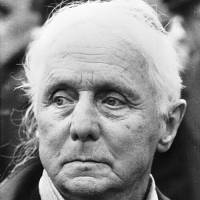
Max Ernst, 1968 — Anefo / Nationaal Archief — CC0
German-born painter, sculptor and printmaker Max Ernst (1891-1976) helped launch Dada in Cologne, became a pillar of Surrealism in Paris and spent the 1940s in the United States, where his presence left a lasting mark on the New York art scene. He is credited with inventing frottage and the collage novel, and with turning technical experiment into a tool for dreams and chance. Prints and illustrated books accompany every stage of his career, from the 1926 portfolio Histoire naturelle to the 1964 artist’s book Maximiliana, now in the collection of the Museum of Modern Art.
Galerie Le Coin des Arts in Paris offers authentic Max Ernst artwork on paper: hand-signed etchings and lithographs, signed limited-edition illustrated books and vintage exhibition posters printed by Mourlot, all selected for print quality, provenance and condition. The gallery ships worldwide by insured DHL Express, free of charge on orders from €1,200.
Max Ernst was born on April 2, 1891, in Brühl, near Cologne, into a Catholic family of nine children; his father, a teacher of the deaf, was a Sunday painter. At the University of Bonn he studied philosophy, psychology, philology and art history, and was struck by art made by psychiatric patients. He taught himself to paint, befriended August Macke, and exhibited in Berlin at the gallery Der Sturm in 1913. A year later he met Hans Arp. Drafted in 1914, he served four years in the German army – years he later described as a death and resurrection. In 1918 he married Luise Straus; their son, born in 1920, would become the American Abstract Expressionist painter Jimmy Ernst.
In 1919 Ernst co-founded Cologne Dada with Johannes Theodor Baargeld and Arp. His collages, cut from mail-order catalogs and science textbooks, produced uncanny new images; with Arp he made the joint “Fatagaga” works. After his first Paris show at Au Sans Pareil in May 1921, Ernst befriended the poet Paul Éluard, illustrated his books and, in 1922, crossed into France without papers to live near Paris with Paul and Gala Éluard. He joined the Surrealists at the movement’s founding in 1924.
In 1925 Ernst discovered frottage – rubbing graphite over paper laid on wood grain, leaves or cloth – and soon adapted it to painting as grattage. In 1926 he designed sets with Joan Miró for Diaghilev’s Ballets Russes. His collage novels La Femme 100 têtes (1929), Rêve d’une petite fille qui voulut entrer au Carmel (1930) and Une semaine de bonté (1934) recombined Victorian-era wood engravings into dreamlike narratives. He acted in Buñuel’s L’Âge d’or (1930) and began sculpting with Alberto Giacometti in 1934.
Interned as an enemy alien at the Camp des Milles in September 1939, together with Hans Bellmer, and detained again in 1940, Ernst fled occupied France with the help of Varian Fry and the collector Peggy Guggenheim, traveling via Madrid and Lisbon to New York in 1941. He married Guggenheim, whose gallery Art of This Century opened in Manhattan in 1942 and showcased European Surrealists alongside young Americans; the marriage soon ended.
In October 1946, in Beverly Hills, Ernst married the American painter Dorothea Tanning in a double wedding with Man Ray and Juliet Browner. The couple moved to Sedona, Arizona, where Ernst built their home by hand and created the monumental concrete sculpture Capricorn (1948). That same year he became a U.S. citizen and published Beyond Painting, a collection of his writings that brought him a wider American audience.
Ernst returned to France in 1953. His Grand Prize for painting at the 1954 Venice Biennale led André Breton to expel him from the Surrealist group. He settled in Huismes, in the Loire Valley, in 1955, took French citizenship in 1958, and moved to Seillans in Provence in 1964. The Museum of Modern Art gave him a retrospective in 1961, also shown at the Art Institute of Chicago, and the Solomon R. Guggenheim Museum staged his last major retrospective in his lifetime in 1975, before it traveled to the Grand Palais in Paris. Ernst died in Paris on April 1, 1976. In 2005 the Metropolitan Museum of Art honored him with a major retrospective.
Ernst treated printmaking as an extension of his inventions. The portfolio Histoire naturelle (Jeanne Bucher, 1926) reproduces 34 frottages as collotypes. In the 1930s he worked at Stanley William Hayter’s Atelier 17 in Paris, the experimental print studio that relocated to New York in 1940. From the 1950s on, he produced a large body of etchings and aquatints, many printed and published by Georges Visat in Paris, as well as color lithographs. Ornamental bands, discs and suns, birds and imaginary alphabets recur throughout.
His masterpiece in book form, 65 Maximiliana, or the Illegal Practice of Astronomy (1964), created with the publisher Iliazd, pays tribute to astronomer Wilhelm Tempel with 34 etchings and aquatints printed by Visat and Louis Lemoine, in an edition of 65 – a copy is at MoMA. Later books include Lewis Carrolls Wunderhorn (1970) and Jean Giraudoux’s Judith (Manus Presse, Stuttgart, 1972), with six lithographs by Ernst and six by Tanning. The catalogue raisonné of the prints, Max Ernst. Œuvre-Katalog. Das graphische Werk, edited by Werner Spies and compiled by Helmut R. Leppien, was co-published in 1975 by the Menil Foundation in Houston and DuMont Schauberg in Cologne; prints are cited by their “Leppien” or “Spies/Leppien” number.
Before acquiring a Max Ernst etching or lithograph, review: the technique; the edition size and numbering, including artist’s proofs and trial proofs; whether the work is hand-signed in pencil; the Leppien catalogue raisonné number; the publisher and printer (Visat, Iliazd, Manus Presse, Erker-Presse); the paper; the provenance; and the condition – fading, foxing and trimmed margins affect value. For limited-edition illustrated books, make sure all plates are present; the signature usually appears on the colophon.
Original print or reproduction? Because Ernst’s images are so widely reproduced, caution is essential. Exhibition posters, even those printed by Mourlot, are unsigned and unnumbered and are not original prints. Offset reproductions of his paintings marketed as “lithographs,” and sheets with a printed rather than hand-written signature, are not the same as the hand-signed impressions listed in the catalogue raisonné. Learn more about what makes an original print.
Galerie Le Coin des Arts selects every Max Ernst artwork with care for authenticity, provenance and condition, and offers museum-quality framing. Explore related artists: Dorothea Tanning, Man Ray, Joan Miró, Roberto Matta and Hans Arp.
The Museum of Modern Art, 65 Maximiliana (1964) · Max Ernst, Wikipedia · Moderna Museet, Max Ernst in Europe 1953-1976 · LeMO, Deutsches Historisches Museum · Werner Spies, Helmut R. Leppien, Max Ernst. Œuvre-Katalog. Das graphische Werk, Houston, Menil Foundation / Cologne, DuMont Schauberg, 1975

Secure payment
3DSecure 2.2

Free DHL Express delivery from €1,200
Carefully prepared parcel
Parcel tracking

Shipment insured
for the full value of the artwork, covering theft and damage

Fairest prices
Certificate of authenticity
Two galleries in Paris
Receive an email as soon as a new artwork is added for this artist
Your message has been sent ! We will get back to you as soon as possible.
Please fill in the form if you need further information such
Please fill in your email address, an email will be sent with a link to update your password.
You can now place orders and track your orders.
To save your wishlist, you can log in or create an account :
This is a 100% custom-made frame, carefully crafted by a professional framer. Finishes are available in light oak, white wood or black wood, with or without mat board and plexiglass. Delivery times may vary depending on the order, with an average lead time of 10 days.
This option will be offered during the cart step.



