
(1882-1963)

BRAQUE Georges
Thalassa I, 1959
Etching LCD8157
4 500.00€


BRAQUE Georges
Nature Morte Oblique
Etching and aquatint LCD8283
2 500.00€

BRAQUE Georges
Migration, 1962
Etching LCD3648
3 800.00€

BRAQUE Georges
The Whole Country, 1962
Lithograph LCD8414
2 800.00€


BRAQUE Georges
Si je mourais là-bas, 1962
Wood engraving LCD7442
3 800.00€


BRAQUE Georges
Dove on green background, 1975
Lithograph LCD6499
2 800.00€


BRAQUE Georges
Descent into hell - plate 4, 1961
Lithograph LCD4535
3 800.00€

BRAQUE Georges
Grey Sky II, 1959
Lithograph LCD2812
2 500.00€


BRAQUE Georges
The Daisies, 1953
Etching and aquatint LCD8000
Sold

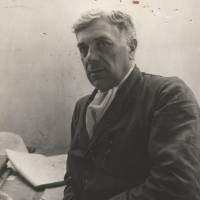
Brazilian National Archives, Public domain, via Wikimedia Commons
Painter, printmaker and co-founder of Cubism, Georges Braque (1882–1963) stands at the very heart of modern art. A Fauve in his youth, he went on to invent Cubism and the papier collé alongside Pablo Picasso, then spent half a century exploring space, texture and the everyday object with rare rigour and quiet poetry. His still lifes, his Studio series and his Birds rank among the defining images of the twentieth century. He was also a printmaker of the first order: his catalogued printed work runs to some two hundred etchings, lithographs and woodcuts, many of them conceived for books by poets.
At its Paris galleries, Le Coin des Arts offers a considered selection of Georges Braque's original prints – chiefly lithographs and etchings – each chosen for the quality of the impression, its provenance and its condition.
Georges Braque was born on 13 May 1882 in Argenteuil, into a family of house painters and decorators. In 1890 the family moved to Le Havre, where his father ran a painting and decorating business. The young Braque attended evening classes at the local école des beaux-arts while learning the decorator's trade: faux wood and marble graining, stencilled lettering, the grinding and mixing of colours. That craftsman's knowledge – a feeling for materials, tools and surfaces – would inform everything he later painted.
Settling in Montmartre in 1902, he studied at the Académie Humbert, where he met Marie Laurencin and Francis Picabia. At the Salon d'Automne of 1905 he discovered the Fauves; adopting their pure, unmixed colour, he painted vivid Fauve landscapes at L'Estaque and La Ciotat in 1906–1907.
In 1907 Braque met Picasso and saw Les Demoiselles d'Avignon. Under the spell of Cézanne, he returned to L'Estaque to paint landscapes built from simple volumes. When the Salon d'Automne of 1908 turned them down, they were shown that November by the dealer Daniel-Henry Kahnweiler, with a preface by Apollinaire. The critic Louis Vauxcelles spoke of 'little cubes' – and Cubism had found its name.
From 1909 to 1914 the two painters worked side by side, 'roped together like mountaineers', as Braque put it. They broke the object into facets, multiplied viewpoints and reduced the palette to greys and ochres. Braque brought into painting the stencilled letters and imitation wood grain of his old trade, and in 1912, at Sorgues, made the very first papier collé, opening the way for every form of collage that followed. Tate's Clarinet and Bottle of Rum on a Mantelpiece (1911) is a fine example of these years.
Called up in 1914, Braque suffered a severe head wound in 1915 and had to be trepanned. After a long convalescence he took up his brushes again in 1917 and published his Pensées et réflexions sur la peinture. The 1920s brought a broader, more sensuous manner – still lifes, pedestal tables, the Canephorae – as well as sets and costumes for Diaghilev's Ballets Russes. In 1925 he moved into a house and studio in Montparnasse designed by Auguste Perret.
In 1928 he bought a house at Varengeville-sur-Mer, on the Normandy coast, where he would spend much of every summer; its cliffs, beaches, boats and fields fed his late work. In 1937 he was awarded first prize at the Carnegie International in Pittsburgh.
Having refused any compromise with the Vichy regime during the Second World War, Braque emerged in 1945 as an artist of international standing. In spring 1946 the Tate Gallery showed him alongside Rouault in Braque and Rouault; two years later he won the grand prize for painting at the Venice Biennale. In 1949 he began the Studio series, a long meditation on space and creation, while the bird – an emblem of freedom and flight – became his central motif. In 1953 he painted Les Oiseaux for the ceiling of the Salle Henri II at the Louvre.
In 1956 the Arts Council of Great Britain and the Edinburgh Festival Society organised a major exhibition of his paintings, first at the Royal Scottish Academy during the Edinburgh International Festival, then at the Tate Gallery from 28 September to 11 November 1956; Braque's bird design for the Edinburgh poster was printed in lithography at the Mourlot workshop. In 1961 L'Atelier de Braque made him the first painter to be exhibited at the Louvre in his lifetime. He died in Paris on 31 August 1963 and was given a state funeral, with André Malraux delivering the eulogy before the Louvre colonnade. He lies in the clifftop churchyard at Varengeville, beside the church for which he designed a stained-glass window. His work hangs in the great museums, from the Centre Pompidou and Tate to MoMA; in 1997 the Royal Academy of Arts devoted an exhibition to Braque: The Late Works.
Printmaking runs through Braque's entire career. In 1911–1912 he etched his first Cubist plates for Kahnweiler, such as Fox and Job, now among the rarest and most sought-after prints of the Cubist movement. In the 1930s Ambroise Vollard commissioned etchings for Hesiod's Theogony; their supple lines, inspired by Greek vase painting, were finally published by Aimé Maeght in 1955.
After 1945 lithography became his preferred medium. He worked with the Mourlot workshop and with Galerie Maeght, which published his colour lithographs and the review Derrière le miroir, illustrated with original lithographs. Birds, still lifes, profiles, stars and the landscapes of Varengeville recur throughout. He also practised etching and aquatint – notably with Aldo Crommelynck – and woodcut.
A friend of poets, Braque made some of the finest illustrated books of the century: René Char's Le Soleil des eaux (1949), Milarepa (Maeght, 1950), Le Tir à l'arc (Louis Broder, 1960), Saint-John Perse's L'Ordre des oiseaux (1962), Apollinaire's Si je mourais là-bas (Louis Broder, 1962), with colour woodcuts, and René Char's Lettera amorosa (Edwin Engelberts, 1963), with twenty-seven original lithographs.
The reference catalogue is Dora Vallier's Braque, l'œuvre gravé (Flammarion, 1982). Each print is cited by its 'Vallier number', the first reference to check; the lithographs published by Maeght and printed by Mourlot are also often cited from those publishers' own catalogues.
Braque is one of the major painters in the history of art, and his original prints offer a way to own a work from his hand at a fraction of the price of his paintings. Caution is essential, however: a great many lithographs 'after' Braque and outright reproductions were published, both in his lifetime and since his death.
When assessing a Braque lithograph or etching, look closely at the technique, the print run and its justification (numbered impression, artist's proof, hors commerce), whether the sheet is pencil-signed (see signature), the Vallier reference, the publisher and printer, whether the plate comes from a book or from Derrière le miroir, and finally the provenance and condition.
Original print or interpretative print? An original print is conceived by Braque himself for the copper plate or the lithographic stone. An interpretative print – an 'after' – is made by a craftsman engraver or lithographer from one of his paintings or gouaches: it may bear the artist's signature, yet it holds neither the same value nor the same place in his œuvre. Conversely, a plate taken from a book or from Derrière le miroir can be fully original without being signed.
Le Coin des Arts selects Georges Braque's original prints with close attention to their authenticity, provenance and condition, and advises collectors on their choice, on framing and on conservation. Discover too the work of his contemporaries at the gallery, among them Pablo Picasso, Henri Matisse, Fernand Léger, Jacques Villon and Nicolas de Staël. In public collections, Braque can be seen at the Centre Pompidou, the Musée du Louvre and Tate.
Dora Vallier, Braque, l'œuvre gravé. Catalogue raisonné, Flammarion, 1982 · Georges Braque, Le Jour et la Nuit. Cahiers 1917-1952, Gallimard · G. Braque: An Exhibition of Paintings, Arts Council of Great Britain, Tate Gallery, 1956 · Royal Academy of Arts, Braque: The Late Works, 1997 · Centre Pompidou, Paris · Musée du Louvre, Les Oiseaux ceiling, Salle Henri II · Tate, London.

Secure payment
3DSecure 2.2

Free DHL Express delivery from €1,200
Carefully prepared parcel
Parcel tracking

Shipment insured
for the value of the artwork, covering theft and damages

Fairest prices
Certificate of authenticity
Two galleries in Paris
Receive an email as soon as a new artwork is added for this artist
Your message has been sent ! We will get back to you as soon as possible.
Please fill in the form if you need further information such
Please fill in your email address, an email will be sent with a link to update your password.
You can now place orders and track your orders.
To save your wishlist, you can log in or create an account :
This is a 100% custom-made frame, carefully crafted by a professional framer. Finishes are available in light oak, white wood or black wood, with or without mat board and plexiglass. Delivery times may vary depending on the order, with an average lead time of 10 days.
This option will be offered during the cart step.


